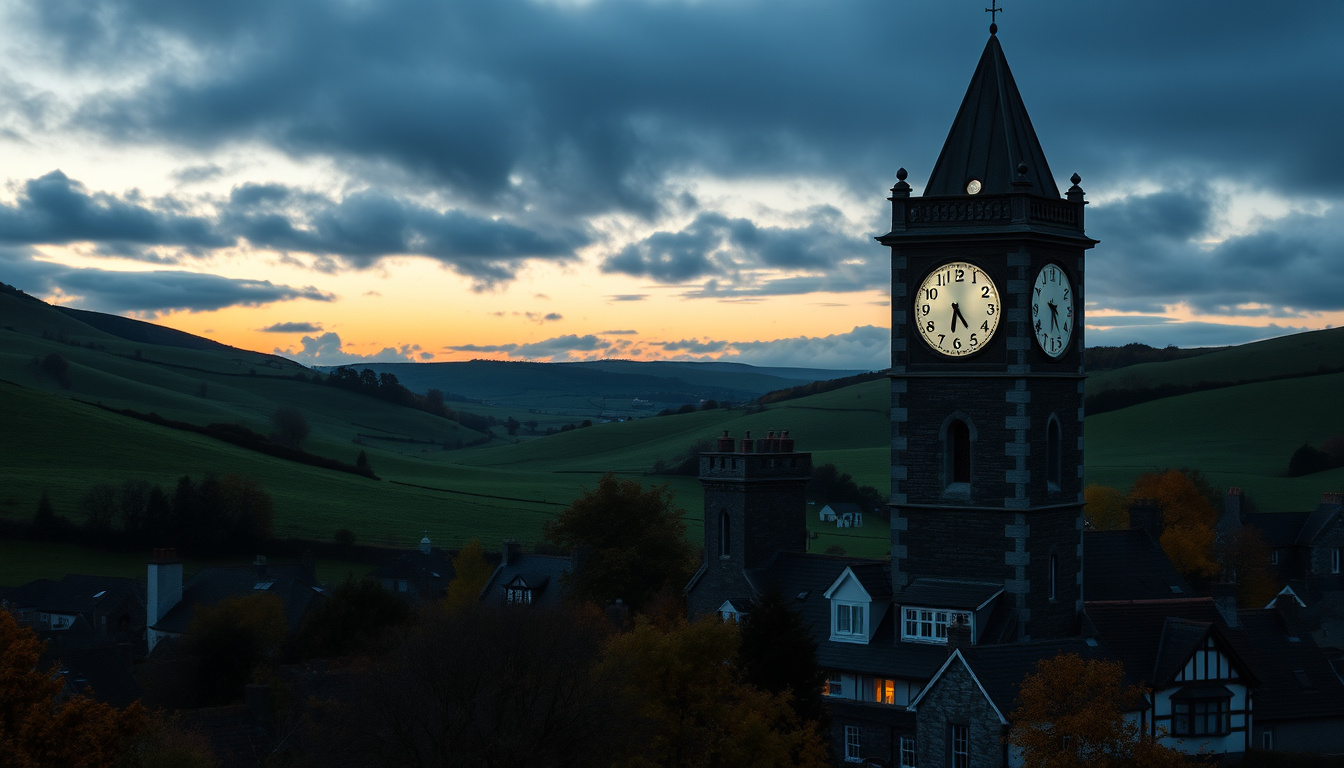

If you live in Ireland, October brings more than just shorter days — there’s a specific Sunday morning when the clocks quietly roll back, and you suddenly have an extra hour to use however you like. For 2025, that Sunday falls on October 26. Whether you’re already counting down or you only remember when your phone buzzes with the change, here’s everything you need to know about when it happens, how it works, and what it actually means for your sleep and your schedule.
End Date 2025: Sunday, October 26 · Clock Change Time: 2:00 a.m. to 1:00 a.m. · Location Focus: Ireland and Europe · Spring Forward Date: Last Sunday of March · Duration Gained: 1 hour
Quick snapshot
- Ireland’s clocks go back on October 26, 2025 (timeanddate.com)
- Change happens at 2:00 a.m. IST, reverting to 1:00 a.m. GMT (Gov.ie)
- EU directive 2000/84/EC mandates this pattern for all member states (EUR-Lex (EU Official Journal))
- EU’s DST abolition proposal stalled with no implementation timeline (European Commission)
- Farming communities remain divided on whether year-round GMT or DST suits them better (The Irish Times)
- 2025 clocks forward: March 30
- 2025 clocks back: October 26
- 2026 clocks forward: March 29
- 2026 clocks back: October 25
- Health advisories recommend gradual sleep adjustment post-change (HSE.ie (Health Service Executive))
- Northern Ireland mirrors Ireland’s schedule on the same date (timeanddate.com)
Five key facts anchor Ireland’s approach to the autumn clock change, with official government confirmation and EU-level legal backing.
| Label | Value |
|---|---|
| 2025 End Date | October 26, Sunday |
| Change Time | 2:00 a.m. to 1:00 a.m. |
| Rule | Last Sunday October |
| Spring Start | Last Sunday March |
| Source | timeanddate.com, citizensinformation.ie |
Do the clocks go back on 26th October?
Exact time of change
On Sunday, October 26, 2025, clocks in Ireland will roll back one hour at 2:00 a.m. Irish Standard Time (IST), which means the time will shift to 1:00 a.m. Greenwich Mean Time (GMT). This is the moment when the country reverts to standard time after months of extended evening light during summer time.
The exact moment matters for anyone scheduling early morning activities. According to timeanddate.com (a recognized authority on global time standards), the change occurs precisely at 2:00 a.m. local time, giving most people an extra hour of sleep — provided they remember to set their clocks before bed on Saturday night.
Irish Standard Time (UTC+1) reverts to GMT (UTC+0), meaning Dublin’s sunrise on October 27 will be at approximately 7:08 a.m. instead of the 6:08 a.m. residents saw under DST.
Ireland specifics for 2025
Ireland follows the EU DST directive (2000/84/EC), which standardizes the end of daylight saving time on the last Sunday of October across all member states. The Irish government confirms this through Gov.ie, leaving no ambiguity about the 2025 date.
Northern Ireland operates on the same schedule — October 26, 2025 — maintaining time coordination across the island regardless of the different administrative structures on either side of the border. Translink (Northern Ireland’s public transport authority) confirms no service disruptions on the change date itself.
What this means: Irish residents gain an extra hour of sleep on Sunday morning but lose an hour of evening daylight starting immediately after the change. The darker mornings are a trade-off that affects commuters, school children, and anyone who prefers natural light after work. For more weather forecasts in Ireland, note how sunset times shift after the transition.
Do the clocks go back in October in Ireland?
Annual pattern
Ireland has followed the same DST schedule for decades: clocks move forward on the last Sunday of March and back on the last Sunday of October. This pattern is legally mandated through EU directive, which Ireland follows as a member state. The rationale combines agricultural efficiency, energy conservation, and alignment with continental European business hours.
Looking back at recent years, the last Sunday pattern holds consistently: October 27 in 2024, October 29 in 2023, and October 30 in 2022. Gov.ie maintains historical records confirming this annual rhythm, making it predictable for anyone planning events or travel around the change.
2025 confirmation
The 2025 date is confirmed as October 26 through multiple independent sources. RTE.ie (Ireland’s national broadcaster) reported on the 2024 change and reinforces the annual schedule. No regional variations exist within the Republic — the entire country moves in unison at the same moment.
The pattern creates 189 days of summer time each year, from late March through late October. For 2025, DST began on March 30 and ends on October 26.
The catch: while the pattern is stable, the EU has discussed ending DST changes entirely. However, the European Commission’s abolition proposal remains stalled with no implementation date set. Ireland continues with biannual switches for now.
Are we losing or gaining an hour?
Fall back gain
When clocks go back in October, Ireland gains one hour. At 2:00 a.m. on October 26, the clocks simply display 1:00 a.m. again — effectively adding 60 minutes to the clock. This means Sunday feels longer, and most adults get an extra hour of sleep if they sleep through the transition.
The practical benefit appeals to many: RTE.ie reports that Irish residents frequently use the extra hour for lie-ins, family activities, or household tasks. It’s one of the more popular twice-yearly time changes because it rewards rather than disrupts.
Spring forward loss
The symmetry flips in March. On the last Sunday of March 2026 (March 29), clocks will move forward from 1:00 a.m. to 2:00 a.m., effectively removing an hour from the day. timeanddate.com confirms the 2026 spring forward date as part of the annual cycle.
The implication: the October “gain” is temporary. By March 2026, the extra hour disappears again. This creates a net-zero position over the year, though the winter months after the October change bring genuinely darker evenings and mornings for several months.
Dublin residents will see sunset shift from around 6:30 p.m. in late October to approximately 4:30 p.m. by late December — a dramatic change that affects outdoor activities, children’s evening activities, and overall mood.
Why do the clocks go back at 2am?
Historical reason
The 2:00 a.m. start time was chosen deliberately to avoid a problematic transition. If clocks changed at midnight or 1:00 a.m., the 1:00 a.m. hour would occur twice in the same night — once naturally, and once again after the rollback. This would create confusion in scheduling, transportation timetables, and digital systems.
By choosing 2:00 a.m., the transition happens after the natural 1:00 a.m. moment has passed. When the clock reaches 2:00 a.m., it simply becomes 1:00 a.m. again. The 1:00 a.m. to 2:00 a.m. window becomes “skipped” in spring (causing a one-hour loss) and “repeated” in autumn (creating the extra hour). This is the standard mechanism across EU member states.
Practical mechanics
The mechanical explanation is straightforward: in October, clocks count 1:00, 1:59, then 1:00 again. Anyone watching an analog clock will see the minute hand move normally through 1:59 and then reverse. Digital devices update automatically, which is why smartphones and computers adjust without user intervention.
For those with older cars, analog watches, or traditional clocks, manual adjustment is required. The standard advice is simple: before bed on Saturday night, turn back clocks one hour (except devices that update automatically). Citizens Information (Ireland’s official information service) provides guidance on the practical steps.
What this means: the 2:00 a.m. timing is designed to minimize disruption to most people’s daily routines. By that hour on a Sunday morning, the majority of people are asleep and won’t notice the transition directly. Late-shift workers and those with specific scheduling needs should plan accordingly.
Can time change affect blood pressure?
Circadian misalignment
The biannual clock change creates more than an inconvenience — it genuinely affects health. Ireland’s Health Service Executive (HSE) warns that disrupting sleep patterns by even one hour can impact physical wellbeing, with blood pressure among the measurable effects.
The human body’s circadian rhythm operates on roughly a 24-hour cycle, regulated by light exposure. When clocks change, especially in autumn when we “gain” an hour, the body’s internal clock momentarily conflicts with the new external schedule. This “social jetlag” — the mismatch between biological time and social time — affects everything from alertness to cardiovascular health.
Research findings
Studies published in medical journals document measurable blood pressure spikes in the days following clock changes. The mechanism relates to disrupted sleep quality and the stress of adjusting schedules. For individuals with existing cardiovascular conditions, the change carries documented risk.
The HSE advisory recommends gradual adjustment: going to bed 15 minutes earlier in the days leading up to the change, maintaining consistent meal times, and avoiding screens before sleep. These small steps reduce the physiological shock of the transition.
The extra hour in October is a gift for sleep — but only if your body actually uses it. Irregular sleep schedules, screen time before bed, and stress can negate the benefit. For those with blood pressure concerns, the weeks after the change warrant extra attention.
What this means: the health effects are real but manageable. Planning ahead — adjusting sleep times gradually, maintaining routines, and monitoring any unusual symptoms in the days after the change — helps the body adapt smoothly. The gain is genuine if used wisely.
Timeline
Ireland’s 2025 clock changes and preview into 2026:
- — Clocks forward 1 hour at 1am (DST begins)
- — Clocks back 1 hour at 2am (DST ends)
- — Clocks forward
- — Clocks back
Confirmed vs Unclear
Confirmed
- Ireland’s DST ends October 26, 2025 per multiple sources including timeanddate.com and Gov.ie
- EU Directive 2000/84/EC mandates last Sunday of October for all member states
- Northern Ireland mirrors the schedule on the same date
- The change occurs at 2:00 a.m., adding one hour
What’s unclear
- EU’s DST abolition proposal has no timeline — European Commission shows stalled progress
- Whether Ireland would adopt permanent summer time or year-round standard time if EU changes occur
- Whether farming community preferences will influence future Irish policy positions
What experts say
“Clocks go forward by one hour at 1am on the last Sunday of March and back one hour at 2am on the last Sunday of October.”
— Citizens Information (Ireland’s official public information service)
“The clocks will go back an hour on Sunday, October 26, 2025, giving everyone an extra hour of sleep.”
— Independent.ie (Irish independent news)
“Daylight Saving Time ends on Sunday, October 26, 2025, at 2:00:00 am local time, when clocks are turned backward one hour to 1:00:00 am local standard time.”
— timeanddate.com (global time authority)
The pattern across official and authoritative sources shows remarkable consistency — Ireland’s October 26 date and the 2:00 a.m. transition time are confirmed across government, media, and specialist time-tracking platforms.
Related reading: Weather 10 Days Ireland: Dublin & Outlook Forecast · Working from Home in Ireland: Jobs, Laws & Tax Guide
Frequently asked questions
Do we lose an hour of sleep on Sunday?
No — in October, we gain an hour. Clocks roll back from 2:00 a.m. to 1:00 a.m., effectively adding 60 minutes to the day. If you sleep through the transition, you wake up with an extra hour available. The loss comes in March when clocks move forward.
Do we get an extra hour in bed in October?
Yes, technically. The extra hour exists on the clock, but whether you actually rest depends on your sleep habits. The HSE recommends using the transition to establish better sleep routines rather than simply staying up later on Saturday.
Do clocks go forward or back in October?
Clocks go back in October. The mnemonic “spring forward, fall back” captures it: March is the forward change, October is the back change. In Ireland specifically, clocks go back on the last Sunday of October at 2:00 a.m.
When do the clocks go back in 2026?
The last Sunday of October 2026 falls on October 25. The pattern is consistent year to year: last Sunday of March (forward) and last Sunday of October (back). timeanddate.com confirms the 2026 date.
What is the silent killer of blood pressure?
Sleep disruption — specifically the circadian misalignment caused by clock changes — is documented as affecting blood pressure. The HSE advises gradual sleep adjustment before and after clock changes to mitigate cardiovascular stress.
When do clocks change in Ireland?
Clocks change twice annually: forward on the last Sunday of March (at 1:00 a.m.) and back on the last Sunday of October (at 2:00 a.m.). Citizens Information confirms this applies to the entire Republic of Ireland uniformly.
Why Does Daylight Saving Time Start at 2 a.m.?
The 2:00 a.m. timing avoids repeating the 1:00 a.m. hour in autumn and prevents skipping it in spring. By changing after the natural 1:00 a.m. moment has passed, the transition doesn’t create scheduling confusion for most industries, transportation, and digital systems.

Ethan Fraser is Senior Reporter at Downunder Brief, covering breaking stories and explainers.