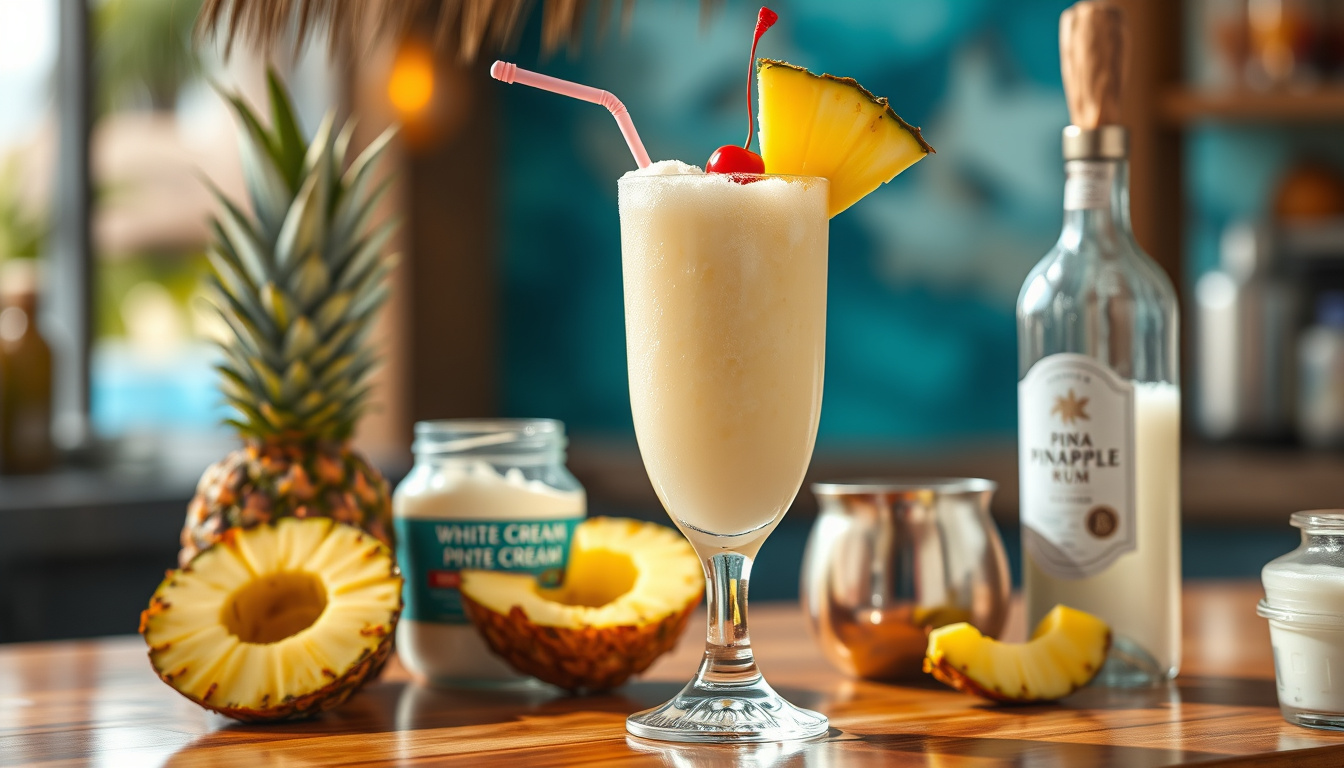
Few cocktails carry a sun-drenched history the way the Piña Colada does. Whether you first encountered it frozen on a beach or blended at home on a rainy evening, that creamy swirl of rum, coconut, and pineapple has a way of making you feel somewhere warmer. This guide walks through the authentic IBA recipe, where it came from, and how to get it right at home — including a few UK-friendly swaps if your local shops don’t stock Puerto Rican staples.
Origin: Puerto Rico ·
IBA Official Ingredients: White Rum, Coconut Cream, Pineapple Juice ·
Standard Ratio: 50 ml rum, 30 ml coconut cream, 50 ml pineapple juice ·
Minimum Ingredients: 3-4 ·
Prep Time: 5 minutes
Quick snapshot
- Created in 1954 by Ramón ‘Monchito’ Marrero at Caribe Hilton, San Juan (Discover Puerto Rico)
- IBA recipe specifies exactly 50 ml white rum, 30 ml coconut cream, 50 ml pineapple juice (International Bartenders Association)
- Coco Lopez is the standard cream of coconut brand for authentic recipes (The Vintage Cook)
- Exact calendar date of invention (month and day unknown)
- Whether lime juice was part of Marrero’s original formula or added later
- Precise nutritional data verified across multiple independent sources
- 1954 — Invention at Caribe Hilton, Puerto Rico (Granturismo Travels)
- 1978 — Puerto Rico designates Piña Colada as its national cocktail (Granturismo Travels)
- 1980s onward — Malibu and modern variations popularize globally (Malibu Drinks)
- Step-by-step blending technique for home bartenders
- UK adaptation options using accessible supermarket ingredients
- Virgin and Jamaican variations for non-alcoholic or bold-flavor alternatives
The table below consolidates the key specifications for the authentic IBA Piña Colada recipe.
| Specification | Detail |
|---|---|
| IBA Recipe | 50 ml white rum, 30 ml coconut cream, 50 ml pineapple juice |
| Origin | Puerto Rico, 1954 |
| Calories per serving | Approximately 300 |
| Best served | Blended or shaken |
| Inventor | Ramón ‘Monchito’ Marrero at Caribe Hilton |
| Standard garnish | Pineapple wedge, cherry, lime wheel |
“This delicious blend of rum, coconut cream, and pineapple juice was created in San Juan in the 1950s and has since won hearts around the globe.”
— Discover Puerto Rico, official tourism authority
What Are the Ingredients of a Piña Colada?
The IBA official Piña Colada recipe requires exactly three core ingredients: 50 ml white rum, 30 ml coconut cream, and 50 ml fresh pineapple juice, blended with ice until smooth. Historically, a few drops of fresh lime juice were added to taste, though this varies by recipe and bartender preference.
Core four ingredients
- White rum (50 ml) — A light, clear spirit. Puerto Rican rums like Bacardí Superior or Havana Club Añejo 3 Años are traditional choices that won’t overpower the coconut and pineapple.
- Coconut cream (30 ml) — Not to be confused with coconut milk. Cream of coconut (Coco Lopez being the standard brand) is thicker, sweeter, and gives that signature rich texture. Using coconut milk instead produces a lighter drink.
- Pineapple juice (50 ml) — Fresh juice is preferred for brightness, though some recipes substitute with frozen pineapple chunks blended directly for thickness without dilution.
- Ice — Crushed or standard ice, depending on whether you’re going for a slushie or a smoother consistency.
“Historically a few drops of fresh lime juice was added to taste.”
— International Bartenders Association, official cocktail authority
IBA official measurements
The International Bartenders Association (global cocktail authority) lists the recipe as 5 parts white rum, 3 parts coconut cream, and 5 parts pineapple juice — translating to the 50-30-50 ml ratio when using a standard 10 ml measure. The Everyday Delicious recipe guide confirms these proportions work consistently across home blenders.
Coconut cream delivers that indulgent, restaurant-quality richness; coconut milk makes something lighter and more refreshing. Your choice depends entirely on the mood, not on which is “correct.”
Is Coconut Milk or Coconut Cream Better for Piña Colada?
This is where home bartenders often pause — and the answer depends on what kind of drink you’re after. Coconut cream gives you body and decadence; coconut milk gives you a lighter, more tropical sip.
Differences in texture
Coconut cream (like Coco Lopez) is sweetened, ultra-thick, and blends into a creamy consistency that clings to ice rather than settling. The Vintage Cook (classic cocktail authority) specifically recommends Coco Lopez for authentic results. Coconut milk is thinner, less sweet, and produces a drink that feels closer to a tropical juice with rum than a dessert cocktail.
The distinction matters most when you want that signature restaurant-quality mouthfeel versus a refreshing tropical cooler. Many bartenders consider cream of coconut non-negotiable for authentic results, but the lighter coconut milk version has its place on hot summer days.
Recipe recommendations
- For classic authenticity: Use cream of coconut. The Anders Erickson bartender guide uses cream of coconut for exactly this reason — it captures the restaurant-quality mouthfeel.
- For a lighter version: Substitute coconut milk. Reduce the quantity slightly (to avoid overpowering the rum) and consider adding a touch more pineapple juice for balance.
- For UK availability: Fresh pineapple and Coco Lopez are widely available in major supermarkets. Malibu rum is a popular adaptation where standard Puerto Rican rums are harder to source.
In the UK, coconut cream can be harder to find than coconut milk. If your local shop only stocks coconut milk, the Piña Colada will taste different — lighter, with less of that signature richness. Adding an extra splash of cream of coconut from a specialty food section transforms the result.
How to Make a Perfect Piña Colada at Home?
The method matters as much as the measurements. Blend wrong, and you’ll get a diluted mess or a grainy texture. Blend right, and you get that silky, frosty tropical drink that makes you forget it’s raining outside.
Step-by-step blending
- Prepare your glass — Chill it in the freezer for 5-10 minutes. A cold glass keeps the drink colder longer and prevents instant melting.
- Add liquid ingredients first — Pour 50 ml white rum, 30 ml coconut cream, and 50 ml pineapple juice into the blender. A Couple Cooks (tested home recipe authority) recommends this order to prevent the coconut cream from sticking to the bottom.
- Add frozen pineapple and ice — Use frozen pineapple chunks (about 1/2 cup) mixed with 1-1.5 cups crushed ice. Frozen fruit thickens without diluting the way ice-only recipes can.
- Blend until smooth — Pulse first to break down the fruit, then blend on high for 20-30 seconds until frothy and consistent. A Farmgirl’s Dabbles (seasonal recipe guide) notes that over-blending can introduce too much air, making the texture fluffy rather than creamy.
- Pour and garnish — Pour unstrained into your chilled glass. Garnish with a pineapple wedge, maraschino cherry, lime wheel, or cocktail umbrella for that visual tropical touch.
Tips for professional results
- Use frozen pineapple, not fresh — A Couple Cooks (tested recipe authority) explicitly recommends frozen pineapple for a thicker consistency without the wateriness that fresh juice or fresh chunks introduce.
- Shake if you lack a blender — The Everyday Delicious technique guide notes that shaking ingredients with crushed ice for 30+ seconds produces a valid Piña Colada, though thinner and more suitable for serving on the rocks.
- Double strain for velvet texture — Run the finished drink through a fine mesh strainer into your glass to remove any fiber or pulp chunks. This step is optional but elevates the mouthfeel noticeably.
“Add frozen pineapple and ice to blender, pulse to break down, add rum, cream of coconut, pineapple juice, lime juice, blend until slushy.”
— A Couple Cooks, tested recipe authority
What Are Common Piña Colada Mistakes?
Even experienced home bartenders stumble on a few recurring issues. Knowing what to avoid saves you from a disappointing batch and multiple trips to rinse out the blender.
Over-blending
Running the blender too long introduces excess air, turning a creamy blend into something frothy and whipped. The texture should be slushy and smooth, not voluminous and fluffy. A Farmgirl’s Dabbles (tested recipe guide) suggests stopping as soon as everything is fully combined — typically 20-30 seconds on high.
Wrong ratios
Skimping on coconut cream to “save calories” produces a drink that tastes more like watered-down pineapple juice than a Piña Colada. The IBA recipe exists for good reason: the 50-30-50 ratio balances the rum’s bite, the coconut’s richness, and the pineapple’s brightness. Anders Erickson (professional bartender resource) confirms that coconut cream is non-negotiable for authentic results.
Using canned pineapple or juice instead of fresh
- Canned pineapple in syrup — Adds excess sweetness and a syrupy mouthfeel that overwhelms the other ingredients. If using canned, rinse the syrup off and use the fruit only.
- Too much ice dilutes the flavor — A common mistake is overfilling with ice to make the drink “last longer.” The result is a frozen, flavorless mixture where the rum and coconut become trace elements. Use enough ice to chill and thicken, not to dominate.
- Room-temperature ingredients — Blending warm liquids with ice creates uneven melting and requires more ice, which dilutes the final product. Chill the rum, pineapple juice, and glass beforehand.
The pattern shows that beginners tend to prioritize quantity over quality — more ice, more pineapple, less coconut. The catch is that the IBA ratios exist because they work; deviation produces something categorically different, not just “lighter.”
Piña Colada Variations and UK Adaptations
The classic recipe is a starting point, not a straitjacket. Regional preferences and ingredient availability have produced legitimate variations worth knowing — especially if you’re shopping in UK supermarkets rather than Puerto Rican specialty stores.
Virgin version
Omitting the rum entirely transforms the Piña Colada into a family-friendly tropical slushie. The The Bar (modern cocktail variations authority) notes this is increasingly popular for designated-driver situations, pregnancy-friendly gatherings, or simply cutting calories without sacrificing the experience. Increase the pineapple juice slightly to compensate for the missing rum’s flavor contribution.
Jamaican style
The Jamaican Piña Colada — often called a “Colada” — uses dark Jamaican rum instead of white, adds a dusting of nutmeg or cinnamon, and sometimes incorporates allspice liqueur. The Bar (regional variation guide) describes this as a bolder, spicier take that shifts the drink from tropical refreshment toward Caribbean complexity.
UK ingredient substitutes
- Malibu rum — Widely available in UK supermarkets, this coconut-infused rum simplifies the drink by adding coconut flavor without requiring separate coconut cream. Malibu Drinks (official brand resource) recommends it for a smooth tropical balance that’s easier to mix at home.
- Fresh pineapple — Major UK supermarkets increasingly stock fresh whole pineapples. Blend chunks directly with a bit of water if you can’t find fresh juice.
- Coco Lopez availability — The The World’s Food (UK and Wales recipe database) confirms that Coco Lopez is available in most larger UK stores, often in the international or cocktail ingredients section.
UK bartenders have everything they need to make an authentic Piña Colada — the main obstacle is knowing what to look for and accepting that Malibu is a perfectly legitimate adaptation, not a compromise. Fresh pineapple, Coco Lopez, and white rum are all within reach of most supermarket trips.
Related reading: Lemon Chicken Recipes
The IBA-approved mix delivers creamy perfection, much like the tropisk blend highlighted in this Swedish Piña Colada recipe for summer gatherings.
Frequently asked questions
What is the origin of the piña colada?
The Piña Colada was invented in 1954 by bartender Ramón ‘Monchito’ Marrero at the Caribe Hilton hotel in San Juan, Puerto Rico. Discover Puerto Rico (official tourism authority) notes that Puerto Rico later designated it as the country’s national cocktail in 1978.
Can you make piña colada without a blender?
Yes. Shake the rum, coconut cream, and pineapple juice with crushed ice for 30+ seconds, then pour over fresh ice. Everyday Delicious (technique guide) confirms this shaken method produces a valid Piña Colada, though thinner in texture than the blender version.
How much alcohol is in a standard piña colada?
A standard 130 ml Piña Colada made with 50 ml of 40% ABV rum contains roughly 1.5 standard drinks. The coconut cream and pineapple juice dilute the alcohol content compared to a straight spirit pour.
What garnish goes on piña colada?
Traditional garnishes include a pineapple wedge, maraschino cherry, lime wheel, or cocktail umbrella. A Farmgirl’s Dabbles (presentation guide) recommends using fresh pineapple fronds for visual drama.
Is piña colada gluten-free?
Yes, when made with naturally gluten-free rum (most standard rums are distilled from sugarcane) and coconut cream without additives. Check specific brand labels for any gluten-containing flavorings.
How to store leftover piña colada mix?
The blended mix does not store well — the ice melts and the coconut cream separates. Prepare only what you’ll drink immediately. Leftover coconut cream can be stored refrigerated for up to 6 months in a sealed container.
What rum is best for piña colada?
Puerto Rican white rums like Bacardí Superior or Havana Club Añejo 3 Años are traditional choices. Granturismo Travels (cocktail recipe authority) specifically recommends Havana Club Añejo 3 Años for its aged complexity without darkening the drink’s color.
How do you make a creamy piña colada?
Use cream of coconut (not coconut milk), frozen pineapple instead of fresh juice, and blend with less ice for a thicker consistency. A Couple Cooks (tested recipe authority) confirms that frozen fruit is the key to achieving restaurant-quality creaminess at home.
“This classic pina colada recipe is based on the original piña colada recipe of Ramón ‘Monchito’ Marrero who claimed to have concocted the pineapple and coconut cocktail at the Hilton Caribe Hotel in Puerto Rico.”
— Granturismo Travels, detailed recipe authority
For UK home bartenders, the Piña Colada is finally within reach — and the difference between a forgettable imitation and one that transports you to a San Juan poolside comes down to three things: proper coconut cream, frozen pineapple, and not over-blending. Malibu rum and supermarket coconut milk work in a pinch, but once you’ve tasted the real thing with Coco Lopez and a quality white rum, there’s no going back.

Andrew Patel leads fact-checking, source verification and corrections at Downunder Brief.