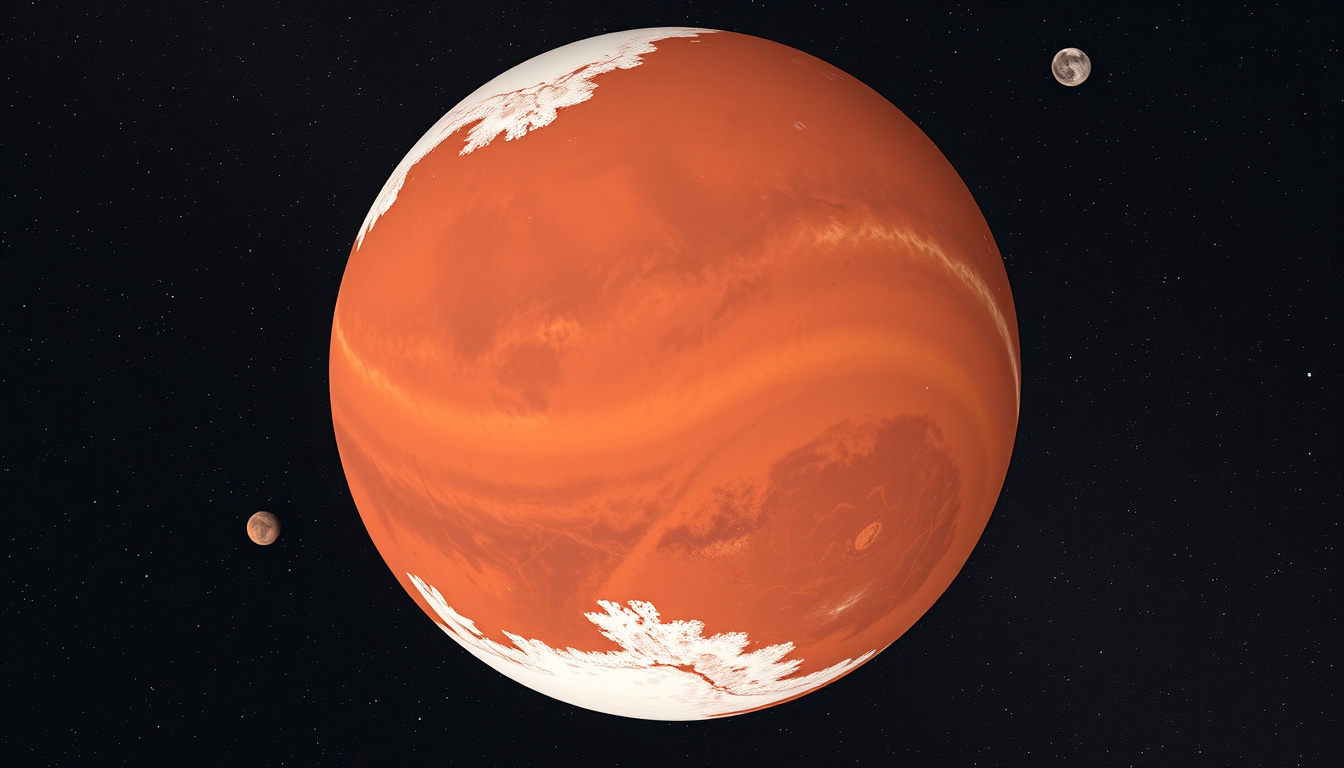

Mars has captivated humanity for centuries as our nearest approachable world. The fourth planet from the Sun sits roughly 228 million kilometers away, representing both a target for exploration and a mirror for understanding Earth’s own evolution. Unlike the barren rock of Mercury or the crushing pressures of Venus, Mars offers a surface that robots have traversed and where water once flowed freely.
Scientists continue to uncover what this rust-colored world reveals about planetary habitability, geological processes, and the possibilities for future human visitors. From towering volcanoes to vast canyon systems, Mars hosts features that dwarf anything found on Earth. Yet questions persist about whether life ever emerged there and whether humans could ever establish a permanent presence.
This article presents verified facts about Mars drawn from NASA missions, peer-reviewed research, and established astronomical data. Each section addresses the most searched questions about the Red Planet while clarifying what remains uncertain in our understanding.
How Big is Mars?
Mars ranks as the second-smallest planet in our solar system after Mercury. Its equatorial diameter measures approximately 6,791 kilometers, making it roughly half the size of Earth. The Red Planet’s radius reaches 3,390 kilometers, while its circumference at the equator spans 21,297 kilometers. If you could flatten Mars completely, its surface area would equal all of Earth’s dry land combined.
Key insights about Mars include:
- Mars’ iron-rich dust creates its red hue.
- Evidence of ancient rivers and lakes exists across its surface.
- Olympus Mons stands as the tallest volcano in the solar system at 22 km high.
- The thin CO₂ atmosphere remains unsuitable for unprotected humans.
- Over 50 missions have reached Mars; the Perseverance rover remains active.
Comparing Mars to Earth
Mars contains significantly less mass than Earth, approximately 6.417 × 10²³ kg, which amounts to roughly 10% of our planet’s mass. This lower mass produces surface gravity of 0.376 g, meaning objects weigh only 38% of their Earth weight. A person weighing 100 kilograms on Earth would register just 38 kilograms on Mars, though the human body would face other challenges beyond simple weight.
| Feature | Mars Value | Earth Comparison |
|---|---|---|
| Diameter | 6,779–6,794 km | Half of Earth’s 12,742 km |
| Mass | 0.107 Earth masses | Gravity 38% of Earth |
| Distance from Sun | 228 million km avg | 1.5× Earth’s distance |
| Year Length | 687 Earth days | Almost 2× Earth’s year |
| Atmosphere | 95% CO₂ | 78% N₂ on Earth |
| Surface Gravity | 0.376 g | 0.38× Earth’s gravity |
What is the Temperature on Mars?
Surface temperatures on Mars swing dramatically depending on location and season. The planet averages approximately -60°C (-80°F), but readings range from a sweltering 27-30°C (68-86°F) at the equator during summer afternoons to a freezing -153°C (-243°F) during polar winters. These extreme variations occur because Mars lacks a thick atmosphere to retain heat and has no global magnetic field to shield it from solar radiation.
Mars Atmosphere Composition
The Martian atmosphere consists primarily of carbon dioxide (95.3%), with nitrogen (2.7%) and trace amounts of other gases. Atmospheric pressure reaches only about 0.6% of Earth’s sea level pressure, roughly equivalent to Earth’s atmosphere at 35 kilometers altitude. This thin blanket cannot retain heat effectively, causing rapid temperature drops after sunset that can exceed 100 degrees within hours.
Despite its thinness, the Martian atmosphere still produces cirrus clouds, morning fog, surface frost, and permafrost. Each winter, carbon dioxide snow falls near the poles, creating seasonal ice deposits that evaporate back into gas when temperatures rise.
Why is Mars Red?
The rusty red color that defines Mars arises from iron oxide (commonly called rust) coating the planet’s surface. Billions of years of weathering broke down iron-rich rocks into fine dust particles. When the Sun’s light strikes this oxidized dust, it reflects wavelengths that appear orange-red to human eyes. This same process explains why iron objects left outdoors on Earth eventually turn orange-brown.
Not all of Mars appears equally red. Fresh volcanic deposits sometimes appear darker or even black, while regions with higher sulfur content may display yellowish tones. The overall appearance shifts subtly across seasons as dust storms redistribute surface materials.
Does Mars Have Moons?
Mars possesses two small moons named Phobos and Deimos, both discovered in 1877 by astronomer Asaph Hall. Unlike Earth’s large spherical moon, these Martian companions appear as irregular, potato-shaped objects covered in dust and carbon-rich ice. Neither moon generates enough gravity to achieve a spherical form, classifying them as captured asteroids rather than true moons.
Phobos: The Inner Moon
Phobos measures approximately 27 kilometers across and orbits Mars at only 9,375 kilometers altitude, making it the closest moon to its parent planet in the solar system. This proximity means Phobos completes three orbits around Mars for every complete rotation of the planet itself. Scientists have observed that Phobos drifts inward by roughly 2 centimeters annually, suggesting it may crash into Mars or break apart into a ring system within approximately 50 million years.
Deimos: The Outer Moon
Deimos ranks as the smaller and more distant of the two Martian moons at only 15 kilometers wide. It orbits Mars at over 23,000 kilometers altitude, completing one orbit every 30 hours. Unlike its sister moon, Deimos displays a smoother surface with fewer impact craters, likely because loose material has filled in the bowl-shaped depressions over billions of years.
Unlike the four gas giants in our outer solar system, Mars currently hosts no ring system. Scientists predict future rings may form when Phobos eventually disintegrates, creating debris that could orbit Mars for millions of years before settling onto the surface.
Does Mars Have Water?
Water exists on Mars today, though not in the liquid rivers and lakes that once carved deep channels across its surface. The Curiosity rover discovered evidence in Gale Crater of a long-lived lake-and-stream system that persisted for millions of years during a warmer, wetter period in Martian history. Ancient riverbeds, deltas, and carved valleys stretching up to 100 kilometers wide and 2,000 kilometers long testify to water that once flowed freely across the planet.
Current Water Distribution
Today, water appears primarily as ice concentrated in the polar ice caps, buried permafrost layers beneath the surface, and atmospheric water vapor. During warmer months, briny underground deposits may produce small amounts of liquid water in cracks and fissures, though such occurrences would remain temporary and localized. The high radiation levels and low atmospheric pressure prevent stable liquid water from pooling on the surface.
Could Life Exist on Mars?
No confirmed evidence of microbial life has been found on Mars to date. However, scientists have detected organic molecules and observed fluctuating methane concentrations that could originate from biological processes. The Perseverance rover continues searching for ancient biosignatures in Jezero Crater, an ancient lake basin that may preserve evidence of past Martian life. Current conditions with extreme cold, high radiation, and thin atmosphere make surface habitability extremely challenging.
Whether microbial life persists underground remains unknown. Future missions will need to drill beneath the surface radiation zone to test samples for definitive biosignature evidence. Claims of current life should be viewed with skepticism pending peer-reviewed confirmation from multiple independent research teams.
A Timeline of Mars Exploration
Humanity has attempted to reach Mars with robotic missions for over six decades. The following milestones mark key achievements in our understanding of the Red Planet.
- 1877 – Asaph Hall discovers Phobos and Deimos using the United States Naval Observatory’s 26-inch refracting telescope.
- 1976 – Viking 1 becomes the first successful lander on Mars, transmitting the first images from the surface and testing soil samples for microbial life. Results returned negative.
- 1997 – Pathfinder mission delivers the Sojourner rover to Ares Vallis, demonstrating that lightweight rovers could explore planetary surfaces affordably.
- 2012 – Curiosity rover lands in Gale Crater, confirming an ancient lake system existed there and detecting organics and methane fluctuations.
- 2021 – Perseverance rover lands in Jezero Crater to collect samples for eventual return to Earth, while the Ingenuity helicopter becomes the first powered aircraft on another planet.
Upcoming missions include the Mars Sample Return campaign, planned to deliver Perseverance’s collected samples to Earth laboratories during the 2030s. Area 51 Underwood Facts provides additional context on classified aerospace development that may influence future Mars missions.
What We Know and What Remains Uncertain
Scientists have established several facts about Mars through decades of observation and robotic exploration. However, significant questions persist about the planet’s past and potential future for human visitation.
| Established Information | Remaining Uncertainties |
|---|---|
| Past liquid water carved channels and lake basins | Whether subsurface microbial life exists today |
| No global magnetic field protects the surface | Timeline for human habitability (likely decades away) |
| Two small irregular moons: Phobos and Deimos | Full extent of underground ice deposits |
| Olympus Mons and Valles Marineris dominate geography | Whether methane fluctuations indicate biological activity |
| Atmosphere is 95% CO₂ at 0.6% Earth’s pressure | Complete timeline of Mars’ geological evolution |
The distinction between confirmed science and active investigation matters when discussing Mars. Rovers have directly observed ancient water features, measured atmospheric composition, and photographed geological formations. Claims about current life or detailed habitability projections require more evidence before becoming established fact.
Mars in Context: Why the Red Planet Matters
Mars represents humanity’s most realistic target for eventually establishing a permanent presence beyond Earth. After Apollo astronauts walked on the Moon, Mars offers the next frontier where humans could potentially live for extended periods. Unlike Venus, where surface conditions prove lethal within minutes, or the gas giants, which lack solid surfaces, Mars provides a rocky substrate where colonists could eventually construct habitats and grow food in controlled environments.
The planet also serves as a scientific laboratory for understanding planetary evolution. By studying how Mars lost its atmosphere and surface water, scientists gain insights into what might happen to Earth over longer timescales. The discovery of past habitability on Mars, even without confirming life, demonstrates that conditions suitable for biology can develop elsewhere in the universe.
International space agencies and private companies have announced plans for crewed Mars missions within the coming decades. Australian Broadcasting Corporation News Facts covers how national space programs contribute to these international efforts. Whether those timelines prove realistic depends on technological advances, funding commitments, and lessons learned from continued robotic exploration.
Expert Perspectives on Mars
NASA scientists have described Mars as the planet most similar to Earth in our solar system based on day length, seasonal cycles, and evidence of past liquid water. This comparison appears repeatedly in mission documentation and public communications from space agencies.
Evidence for ancient water on Mars is overwhelming. The rover observations confirm stream channels, lake deposits, and mineral formations that only form in the presence of liquid water over extended periods.
Research published through peer-reviewed journals and presented at planetary science conferences shapes our understanding of Martian geology and habitability potential. The Perseverance science team has emphasized that finding definitive biosignatures may require analyzing returned samples in Earth laboratories, where contamination concerns and sophisticated instruments can provide unambiguous results.
Looking Forward: Mars Exploration
Multiple spacecraft continue operating on and around Mars, returning data that refines our understanding of the planet’s environment and history. The Perseverance rover collects core samples that will eventually travel to Earth, while orbiters map surface features and monitor seasonal changes. These robotic pioneers prepare the way for eventual human exploration by identifying potential landing sites and demonstrating technologies for using local resources.
The coming decades will reveal whether Mars can support permanent human outposts or remain a destination only robots can reach affordably. Each mission adds pieces to a puzzle humanity has been assembling since telescopes first revealed the Red Planet’s rust-colored disk in our night sky.
For those seeking to understand our solar system’s terrestrial planets, comparing Mars to solar system planets provides essential context. Similarly, reviewing the broader space missions timeline helps situate Martian achievements within humanity’s larger push into the cosmos.
Frequently Asked Questions
Can humans live on Mars?
Not yet. The thin CO₂ atmosphere, extreme cold, and high radiation make human survival impossible without extensive life support. Scientists estimate decades of preparation would be needed before the first crewed missions.
How far is Mars from Earth?
Mars averages 225 million km from Earth, but this varies from 55.7 million km during close approach to 401 million km at opposition. Spacecraft typically take 6-9 months to reach the Red Planet.
What is Olympus Mons?
Olympus Mons is the tallest volcano in our solar system, rising 21.9-27 km above the surrounding plain with a base spanning 370-624 km. Its shield shape resembles Hawaiian volcanoes but at a vastly larger scale.
Does Mars have rings?
Mars currently has no rings. However, scientists predict Phobos may break apart in approximately 50 million years, potentially forming a ring system around the planet at that future time.
How many missions to Mars?
Over 50 missions have been attempted since the 1960s. Successful missions include Viking landers (1976), Pathfinder (1997), Curiosity rover (2012), and Perseverance with Ingenuity helicopter (2021). Many others failed or achieved only partial success.
Why is Mars red?
Mars appears red due to iron oxide (rust) coating its surface. The planet’s iron-rich dust, formed over billions of years through weathering, reflects reddish light from the Sun, giving Mars its distinctive rusty appearance.

Catherine Roy is Editor-in-Chief at Downunder Brief, overseeing editorial standards, publication decisions and corrections.