
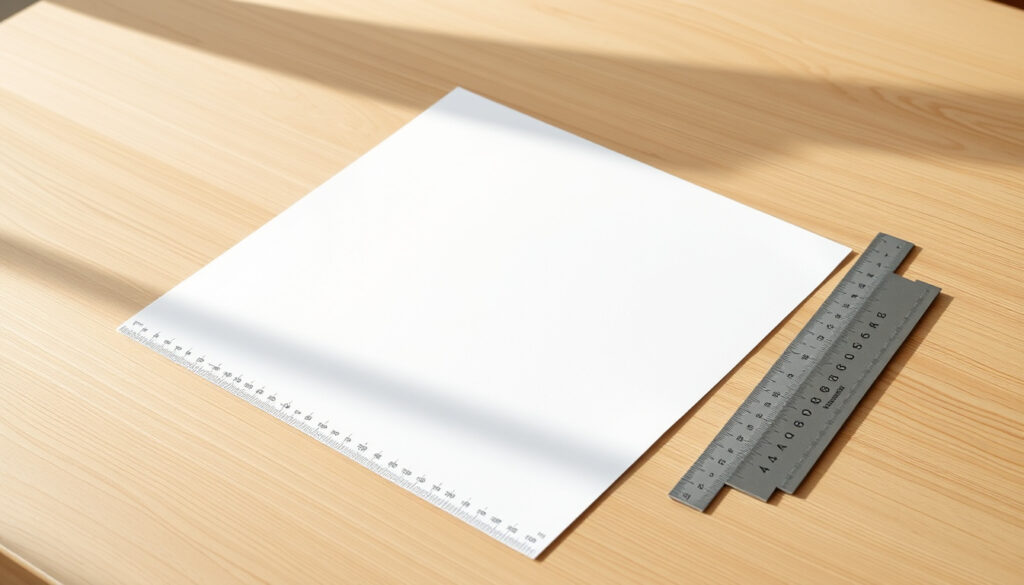
Anyone who’s walked into a print shop needing a poster knows the frustration of sizing confusion. A2 paper—measuring 420 × 594 mm—sits right in that sweet spot between the massive A1 and the more everyday A3. Whether you’re designing event signage, technical drawings, or just trying to understand the numbers on a template, getting a handle on A2 dimensions pays off fast.
Dimensions (mm): 420 × 594 · Dimensions (cm): 42.0 × 59.4 · Dimensions (inches): 16.5 × 23.4 · Aspect Ratio: 1:√2 · Half of A1: Yes
Quick snapshot
- 420 × 594 mm (VistaPrint)
- Half of A1 paper size (A2-size.com)
- Popular for posters and notices (Go Displays)
- 594 × 841 mm (Papersizes.io)
- Twice A2 surface area (Go Displays)
- Better for larger diagrams (Papersizes.org)
- 297 × 420 mm (Papersizes.org)
- Half of A2 size (VistaPrint)
- Common desktop print size (Neenah Paper)
- 210 × 297 mm (Walmart Business)
- Quarter of A2 area (Papersizes.org)
- Standard letter format globally (Papersizes.io)
Five A-series formats matter for most practical situations, arranged by area: A0 is largest, followed by A1, A2, A3, and A4. Each size halves the previous one by cutting parallel to the shorter side.
| Label | Value |
|---|---|
| Standard Dimensions (mm) | 420 × 594 |
| Dimensions (cm) | 42.0 × 59.4 |
| Dimensions (inches) | 16.5 × 23.4 |
| Area (cm²) | approx. 25,000 |
| ISO Series | A2 (A-series) |
What is A1, A2, A3, and A4?
A-Series Standards
The A-series paper sizes trace back to the German DIN (Deutsche Institut für Normung) standards, later adopted internationally as ISO 216. According to Papersizes.org (paper size standardization authority), the A0 format serves as the foundation: it was deliberately defined to have an area of exactly one square meter. Every subsequent size—A1, A2, A3, A4—is derived by folding each sheet in half parallel to its shorter edge, which maintains the series’ signature proportions.
Key Dimensions Overview
The elegance of the A-series lies in its consistent aspect ratio of approximately 1:1.4142 (the square root of 2). A2-size.com (paper size reference resource) confirms this ratio allows any A-size sheet to be scaled up or down without wasted margins or awkward adjustments. The ratio is also called the Lichtenberg ratio, named after the 18th-century German physicist who first described this proportional relationship.
What is A2 size in cm?
A2 in cm and mm
A2 measures exactly 420 by 594 millimeters, which translates to 42.0 by 59.4 centimeters. The VistaPrint poster size guide (print services provider) lists A2 as one of the standard formats alongside A1, A3, and A4. This precision matters for designers working with bleed areas and margins—knowing the exact dimensions prevents costly reprints.
A2 in inches
In imperial units, A2 equals approximately 16.5 by 23.4 inches. Go Displays (display equipment specialist) notes that some sources list more precise figures—16.54 by 23.39 inches—reflecting the mathematical conversion from millimeters. The difference is marginal for most printing purposes.
For digital work, A2 at standard 300 DPI resolution works out to roughly 4,961 by 7,016 pixels. At 150 DPI (acceptable for large-format viewing from a distance), the dimensions drop to about 2,480 by 3,508 pixels.
Printers and design software need exact pixel dimensions for high-quality output. A2 at 300 DPI requires images roughly 35 megapixels—far beyond standard camera outputs and a key reason professional printing services handle these files.
What’s the difference between A1 and A2 paper?
Size Comparison
A1 measures 594 by 841 millimeters, making it exactly twice the area of A2 (420 by 594 mm). A2-size.com (paper size specialist) explains that halving A1 parallel to its shorter side produces A2—cut 594 mm from the 841 mm dimension, and you’re left with the A2 format. The relationship works in reverse too: two A2 sheets placed side by side (with the 420 mm sides touching) form an A1.
Scaling Rules
The ISO 216 standard ensures that scaling between A-series sizes works perfectly in both directions. Papersizes.org (standards documentation resource) confirms that the √2 aspect ratio means each halving preserves exact proportions—a design that fits A1 will scale to A2 without distortion or empty borders.
A1 costs significantly more to print and frame than A2. For event organizers on a budget, A2 delivers nearly the same visual impact without the premium pricing and specialized mounting hardware that A1 often requires.
What’s bigger, A2, A3 or A4?
A2 vs A3
A2 is larger than A3 in every dimension. A3 measures 297 by 420 millimeters, which means cutting A2 parallel to its shorter side (420 mm) produces two A3 sheets. The VistaPrint poster guide (commercial printer) confirms this halving relationship holds consistently across the series.
A2 vs A4
A4—the familiar office and document paper size—measures 210 by 297 millimeters. Four A4 sheets arranged in a 2×2 grid exactly equal one A2 sheet in area. According to Walmart Business (retail paper guide), A4 serves as the global default for correspondence outside the United States and Canada.
For context: A4 is what fits in most home and office printers. A2 won’t fit—it requires either a wide-format printer or a trip to a professional print shop.
Is A2 too big for a poster?
Poster Applications
A2 is a popular poster size precisely because it strikes a balance. Go Displays (event display specialist) calls A2 a “fan favourite for event posters”—it’s large enough for readable text from several meters away while remaining manageable for transport and mounting.
Printing Considerations
Standard home and office printers max out at A4, so A2 requires professional printing services. Most print shops list A2 as a standard format with 420×594 mm as the expected dimensions, according to Solopress (commercial printing services). Paper weight matters too—A2 poster stock typically ranges from 120 to 170 gsm (grams per square meter), with heavier stocks preferred for displayed posters that need to hang without curling.
A2 isn’t oversized for most poster needs—it’s actually the practical sweet spot. Event organizers get enough visual presence without the framing and transport headaches that come with A1.
The table below shows how each A-series format relates in size, with A2 serving as the baseline for comparison.
| Format | Dimensions (mm) | Dimensions (inches) | Area relative to A2 |
|---|---|---|---|
| A0 | 841 × 1189 | 33.1 × 46.8 | 4× |
| A1 | 594 × 841 | 23.4 × 33.1 | 2× |
| A2 | 420 × 594 | 16.5 × 23.4 | 1× (baseline) |
| A3 | 297 × 420 | 11.7 × 16.5 | ½× |
| A4 | 210 × 297 | 8.27 × 11.69 | ¼× |
Five A-series sizes cover most practical needs, with each step halving or doubling the area of the previous format. A0 holds four times A2’s area, while A4 holds exactly one-quarter.
The technical specifications below summarize the key measurements for quick reference.
| Specification | Value |
|---|---|
| Width (mm) | 420 |
| Height (mm) | 594 |
| Width (cm) | 42.0 |
| Height (cm) | 59.4 |
| Width (inches) | 16.5 |
| Height (inches) | 23.4 |
| Aspect ratio | 1:1.4142 (√2) |
| Surface area (m²) | 0.25 |
| Standard for | Posters, notices, technical drawings |
| Part of | ISO 216 A-series |
Confirmed facts
- ISO 216 dimensions exact across sources (verified by Papersizes.org)
- A0 has area of 1 square meter per ISO definition (Papersizes.org)
- A-series adopted in Europe since 19th century (Papersizes.io)
What’s unclear
- Minor inch variations exist across sources due to rounding (Papersizes.io)
The A0 sheet measures 84.1 x 118.9 cm or 33.1 x 46.8 inches and has a surface area of 0.999 949 m² or almost 1 m².
— Adobe Creative Cloud (design authority)
The ratio between the long side and the short side is the square root from 2 (√2). This is about 1.414. This ratio is also called the Lichtenberg ratio.
— A2-size.com (paper size specialist)
A2 poster size is effectively half the size of the A1 measurement, even with the smaller size, the A2 print is a fan favourite for event posters.
— Go Displays (printing guide)
For designers and print buyers, A2 remains a workhorse format. It offers enough real estate for detailed diagrams, event promotion, or technical drawings without the storage, transport, and cost premiums that come with A1.
What is A2 paper size in pixels?
At standard 300 DPI resolution (high-quality print), A2 measures approximately 4,961 × 7,016 pixels. At 150 DPI (adequate for viewing from a few meters), it’s roughly 2,480 × 3,508 pixels.
What is A2 paper size in mm landscape?
Width becomes height in landscape orientation: 594 mm wide × 420 mm tall. The standard portrait format swaps these—420 mm wide × 594 mm tall.
What is A2 size in feet?
A2 measures 1.375 feet (16.5 inches) by 1.95 feet (23.4 inches). This conversion helps when working with imperial frame sizes or display spaces measured in feet.
Can standard printers handle A2 paper?
No. Standard home and office printers top out at A4. A2 requires either a wide-format printer or professional printing services from print shops equipped with larger-format machinery.
Is A2 paper size the same worldwide?
Yes. ISO 216 defines A-series dimensions in millimeters, adopted by most countries globally. The United States and Canada use ANSI/Letter sizing instead of A-series, but A2 dimensions remain consistent wherever the ISO standard applies.
What GSM is typical for A2 paper?
A2 poster stock typically ranges from 120 to 170 gsm (grams per square meter). Standard writing paper for A2 documents runs 80–100 gsm, while heavy art papers for display work can exceed 300 gsm.
How does A2 compare to US letter sizes?
US Letter (8.5 × 11 inches or 216 × 279 mm) is smaller than A4 (210 × 297 mm). A2 (420 × 594 mm) is roughly 4.9 times the area of US Letter. The two sizing systems aren’t directly equivalent—conversions between them always involve some scaling or cropping.
Related reading: Queen Size Mattress Dimensions · Facts About Mars Size
A2 paper, measuring 420×594 mm or 16.5×23.4 inches, represents half the area of A1 dimensions in mm and inches, ideal for posters over smaller formats.

Andrew Patel leads fact-checking, source verification and corrections at Downunder Brief.