The queen size mattress dominates American bedrooms, measuring 60 inches wide by 80 inches long and providing 30 inches of personal width for each sleeper. This configuration strikes a precise balance between spacious comfort for couples and practical constraints of standard bedroom dimensions.
Industry data consistently identifies the queen as the most popular mattress size in the United States, outpacing both the narrower full size and the more expansive king. Its dimensions accommodate the majority of adult sleepers while leaving adequate floor space for furniture and movement in rooms as compact as 10 feet by 10 feet.
Understanding the specifications, comparative advantages, and purchasing considerations for queen mattresses requires examining standardized measurements, material variations, and the specific needs of different sleeper types. The following analysis draws from manufacturer specifications and sleep industry research to provide a comprehensive factual overview.
What Are the Dimensions of a Queen Size Mattress?
| Standard Size 60 x 80 inches |
Surface Area 33.3 sq ft |
| Width Per Person 30 inches |
Min Room Size 10 x 10 feet |
- The 60-by-80-inch configuration provides 4,800 square inches of sleep surface
- Each sleeper receives 30 inches of width when shared by two people
- Industry standards permit slight manufacturing variations; Serta notes dimensions of 60 x 79.5 inches
- Specialized variations include the Olympic Queen (66 x 80 inches) and California Queen (extra length)
- Requires a minimum 10-by-10-foot room to accommodate bed frame and walking space
- Fits comfortably through standard doorways and staircases during moving
| Specification | Measurement |
|---|---|
| Width | 60 inches (152 cm) |
| Length | 80 inches (203 cm) |
| Surface Area | 4,800 sq in (33.3 sq ft) |
| Width Per Person (Shared) | 30 inches |
| Minimum Room Size | 10 x 10 feet |
| Typical Thickness Range | 8-14 inches |
| Olympic Queen Variant | 66 x 80 inches |
| California Queen Variant | 60 x 84 inches |
The Mattress Size Dimensions standards establish these measurements as the baseline for American mattress manufacturing, though individual brands may vary by fractions of an inch.
Queen vs King Mattress: Key Differences
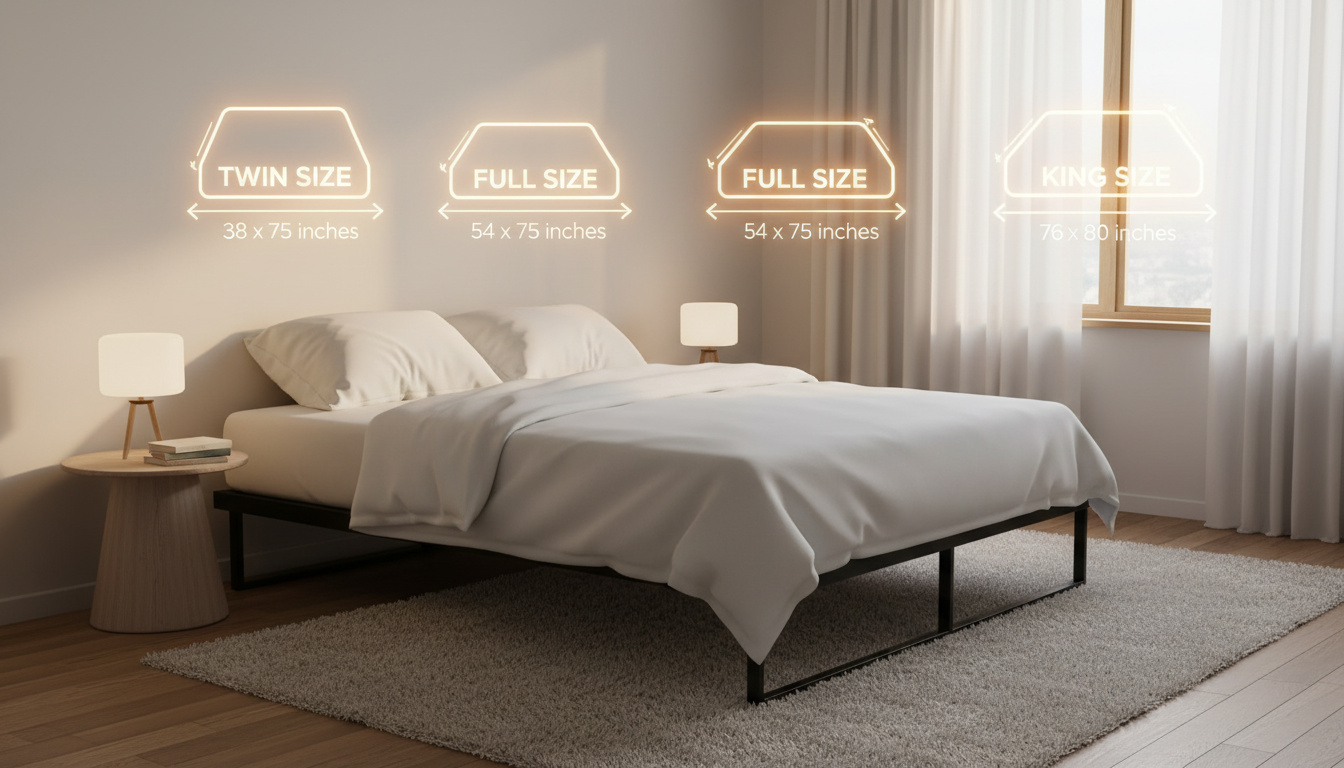
Selecting between queen and king sizes involves evaluating spatial constraints against comfort priorities. The standard king measures 76 inches wide by 80 inches long, offering 16 additional inches of width compared to the queen, while maintaining identical length according to Sleepopolis and Amerisleep.
Queen vs King
The king size provides 38 inches of width per person versus the queen’s 30 inches, making it preferable for couples who share their bed with children or pets. However, king mattresses require a minimum 12-by-12-foot room compared to the queen’s 10-by-10-foot minimum. King beds also demand more expensive accessories, including bedding and frames, and may prove difficult to maneuver through narrow staircases or doorways.
A king mattress requires 44% more floor space than a queen. Before upgrading, measure not just the room dimensions but also access points including hallways and stairwells to ensure the larger frame can reach the bedroom.
Queen vs Full
Full size mattresses measure 54 inches wide by 75 inches long, providing only 27 inches of width per person according to Tampa Mattress. This makes the full size suitable primarily for solo adults or guest rooms rather than primary sleeping arrangements for couples. The full size accommodates the same 10-by-10-foot room requirement as the queen but offers significantly less personal space.
California King vs Queen
The California king presents an alternative configuration at 72 inches wide by 84 inches long, trading width for additional length. This size suits taller sleepers or narrow rooms that cannot accommodate the 76-inch width of a standard king, though it still requires the same 12-by-12-foot room minimum as the standard king according to Helix Sleep.
For a detailed comparison, see our Queen vs. King Mattress Comparison.
Best Queen Size Mattresses for 2025
Current market analysis reveals significant gaps in verified 2025-specific reviews and rankings. Available research from early 2025 indicates that comprehensive testing data for the latest models remains limited, with most comparison sites focusing on dimensional specifications rather than performance testing of current year releases.
Hybrid Construction Advantages
Queen hybrid mattresses, combining foam layers with pocketed coil systems, demonstrate superior performance in three critical areas for couples: motion isolation, durability, and targeted support. The coil systems provide zoned lumbar support beneficial for back pain sufferers, while foam layers absorb movement to reduce partner disturbance.
Quality queen hybrid mattresses priced under $500 remain rare in the current market. Entry-level options at this price point typically compromise on coil count, foam density, or longevity, potentially requiring replacement within 3-5 years rather than the standard 7-10 year lifespan.
Firmness Recommendations by Sleeper Type
Medium-firm surfaces rated 5-7 out of 10 on the firmness scale generally provide optimal performance for both side sleepers and back pain sufferers. This firmness level cushions pressure points at shoulders and hips while maintaining spinal alignment. Soft mattresses rated below 5 typically lack sufficient support for back pain management, though they may suit lighter side sleepers under 130 pounds.
Couples should prioritize models with pocketed coil systems and dense memory foam comfort layers. These materials significantly reduce motion transfer compared to traditional innerspring designs with connected coils, ensuring that one partner’s movement does not disturb the other’s sleep.
Specific 2025 model recommendations require updated testing data not yet available in current research databases. Consumers seeking the latest performance rankings should consult recent publications from Mattress Insider and consumer testing organizations.
How Much Does a Queen Size Mattress Cost?
Queen mattress pricing spans from approximately $300 for basic foam models to over $2,000 for luxury hybrid or latex constructions. Price variations reflect material quality, coil technology, cooling features, and brand positioning rather than dimensional differences.
Price Tiers and Materials
Entry-level queens utilizing basic polyfoam typically range from $300-$600. Mid-range hybrids with pocketed coils and memory foam layers generally fall between $800-$1,500. Premium options incorporating organic latex, advanced cooling technologies, or adjustable firmness mechanisms often exceed $1,800 according to Serta market analysis.
Lifespan and Durability Factors
Hybrid queen mattresses typically maintain optimal performance for 7-10 years, depending on sleeper weight, usage patterns, and foundation quality. All-foam models may develop body impressions sooner, often requiring replacement at the 5-7 year mark. Rotating the mattress every 3-6 months extends longevity.
Trial Periods and Warranties
Most manufacturers offer trial periods ranging from 100 to 365 nights, allowing buyers to test the mattress in their home environment. Warranty coverage typically spans 10-25 years, though consumers should examine whether the warranty covers full replacement or prorated costs after the initial decade.
How Long Does a Queen Size Mattress Last?
The functional lifespan of a queen mattress follows a predictable degradation curve, with performance changing measurably across distinct phases of ownership.
- Break-in Period (0-30 days): New mattresses require 2-4 weeks for materials to soften and conform to sleeper body shapes. Coils settle and foam cells decompress during initial use.
- Peak Comfort Phase (Months 6-36): Materials reach optimal conformity and support. Hybrids maintain consistent edge support and pressure relief during this period.
- Gradual Wear (Years 3-7): Foam layers begin showing compression; coil tension may decrease. Sleepers might notice increased motion transfer or reduced lumbar support.
- Replacement Indicators (Years 7-10): Visible sagging exceeding 1.5 inches, persistent morning pain, or noisy springs indicate the mattress has exceeded its useful service life.
What Do We Know for Certain About Queen Mattresses?
Objective specifications differ from subjective performance characteristics in the mattress industry. The following distinction separates established facts from variable factors.
| Established Information | Information Remaining Unclear |
|---|---|
| Standard dimensions measure 60 x 80 inches (ASTM standards) | Specific 2025 model performance rankings (limited testing data available) |
| Queen provides 30 inches width per person | Exact pricing for current market (fluctuates by retailer and promotions) |
| Requires minimum 10 x 10 foot room | Individual firmness preferences vary by body weight and sleep position |
| Most popular size in US market | Precise lifespan for specific sleeper weights (depends on usage) |
| Variations include Olympic and California Queen sizes | Availability of quality hybrids under $500 (market scarcity confirmed) |
Why Is the Queen Size the Standard for Couples?
The queen size achieved market dominance by solving a spatial equation: providing adequate personal space for two adults while fitting within standard American bedroom dimensions. At 30 inches of width per person, it exceeds the 27 inches offered by full-size beds, eliminating the cramped conditions that lead to sleep disruption for couples.
Historical housing trends cemented this status. As suburban homes and urban apartments standardized bedroom sizes around 10-by-10 to 12-by-12 footprints, the queen mattress optimized usable floor space. King beds, while more spacious, require 12-by-12 minimums that exclude them from many guest rooms and smaller master bedrooms.
The dimensions also accommodate the physical stature of the majority of American adults. At 80 inches long, the queen fits sleepers up to 6 feet 8 inches tall without requiring the specialized length of California variants, making it the pragmatic default for the widest demographic range.
What Do Sleep Experts Say About Queen Mattresses?
Industry publications and manufacturers provide consistent data regarding dimensional standards and spatial requirements, though they emphasize different aspects of mattress selection.
Queen mattresses measuring 60 inches wide by 80 inches long provide the most popular size in the US for couples, delivering 30 inches of width per person while accommodating standard room sizes.
— Custom Comfort Mattress
King mattresses at 76 inches wide require a minimum 12×12-foot room, while queen beds fit comfortably in 10×10-foot spaces, making them the practical choice for couples in average-sized bedrooms.
— Sleepopolis
California King mattresses trade 4 inches of width for 4 inches of length compared to standard king, better suiting tall sleepers or narrow rooms, though both sizes demand equivalent floor space.
— Amerisleep
Summary
The queen size mattress, measuring 60 by 80 inches, represents the optimal compromise between personal sleeping space and room efficiency for most American couples. It provides 30 inches of individual width—sufficient for undisturbed rest—while fitting within standard 10-by-10-foot bedrooms. When selecting among queen options, consumers should prioritize hybrid constructions for durability and motion isolation, expect quality models to range from $800-$1,500, and verify trial periods of at least 100 nights. For detailed dimensional comparisons, reference our Mattress Size Dimensions guide.
Frequently Asked Questions
What size bed frame fits a queen mattress?
Queen mattresses require bed frames measuring 60 by 80 inches. Platform beds, box springs, or adjustable bases designed for queen dimensions provide proper support. Ensure the frame includes center support bars to prevent sagging.
Can I use a queen mattress on an adjustable base?
Yes, queen mattresses work with adjustable bases provided they are compatible with flexible foundations. Most modern memory foam and hybrid queens accommodate articulating bases, though traditional innerspring models may lack the necessary flexibility.
What is the difference between full and queen mattresses?
Full mattresses measure 54 by 75 inches, providing 6 inches less width and 5 inches less length than queens. This reduces personal space to 27 inches per person, making full sizes suitable for solo sleepers rather than couples.
How much bigger is a king than a queen?
King mattresses are 16 inches wider than queens (76 versus 60 inches) while maintaining the same 80-inch length. This additional width provides 8 extra inches of personal space per person but requires significantly larger bedrooms.
Will a queen mattress fit up narrow stairs?
Queen mattresses generally navigate standard staircases when rotated vertically. The 60-inch width typically clears residential doorways and stairs, unlike king sizes which often prove difficult to maneuver through tight spaces.
What firmness should couples choose?
Couples generally benefit from medium-firm mattresses rated 5-7 out of 10, which accommodate different sleep positions. Hybrids with pocketed coils minimize motion transfer, preventing partner movement from disturbing sleep.
Related stories




Liam O'Brien covers Australian politics and public affairs for Downunder Brief.