If you’ve spotted purple sweet potatoes at the market lately and wondered what all the fuss is about, you’re not alone. These Japanese Murasaki varieties are winning fans for a reason that goes beyond their striking looks. Recent research suggests they carry a nutritional edge that may matter most for people managing blood sugar. Here’s what the evidence actually shows — and what it means for your plate.
Antioxidant Content: Higher than orange varieties · Origin: Japanese Murasaki type · Flesh Color: Creamy white with purple skin · Availability: Ireland markets like Asia Market · Best Cooking Method: Boiling preserves nutrients
Quick snapshot
- Higher antioxidants than orange counterparts (University of California research)
- GI of 77 vs white potato at 93 (Healthline nutritional analysis)
- Exact glycemic index variance between purple and orange varieties in clinical settings
- Long-term diabetes outcomes from regular purple sweet potato consumption
- Named veggie of the year in 2024 by Sanitarium (Sanitarium health report)
- PMC studies on diabetic-suitable varieties published recently (Sanitarium health report)
- More research on anthocyanin mechanisms for blood sugar management
- Wider Ireland retail availability as demand grows
Key specifications for the Murasaki variety commonly found in Irish markets are summarised in the table below.
| Attribute | Value |
|---|---|
| Scientific Name | Ipomoea batatas (Murasaki variety) |
| Skin Color | Dark purple |
| Flesh Color | Creamy white |
| Key Nutrient | Anthocyanins |
| Calories per 100g | 86 |
| GI (purple potato) | 77 |
Is purple sweet potato healthier?
Antioxidants compared to orange
When it comes to antioxidant firepower, purple sweet potatoes pull ahead of their orange cousins. A cup of cooked purple sweet potato delivers roughly 500 mg of anthocyanins, putting it close to blueberries at 600 mg per cup, according to research from the University of California. Orange varieties, meanwhile, rack up their credentials with beta-carotene instead — excellent for eye health, but a different nutritional story altogether.
Anthocyanins are the compounds behind purple’s vivid hue, and the science is accumulating. Research published in PMC identifies purple-fleshed sweet potatoes as having antidiabetic properties tied directly to these pigments. The Healthline notes that these compounds are linked to better cholesterol markers and lower heart disease and diabetes risk.
Nutrient profile overview
Purple sweet potatoes offer roughly 86 calories per 100g, with about 20g of carbs, 3g of fiber, and 1.6g of protein. That fiber content matters: both soluble and insoluble fiber support gut health and help smooth out blood sugar spikes, as noted by Naturallie Plantbased.
Where purple varieties genuinely flex is vitamin C content. PMC research shows purple-fleshed sweet potatoes deliver at least twice the vitamin C of regular potatoes. For anyone looking to stretch their nutrient intake without loading on calories, that’s a meaningful difference.
Purple sweet potatoes earn their color and their reputation. The anthocyanin advantage is real and backed by peer-reviewed research — not marketing hype.
What Is A Purple Sweet Potato And How Do You Use It?
Description and varieties
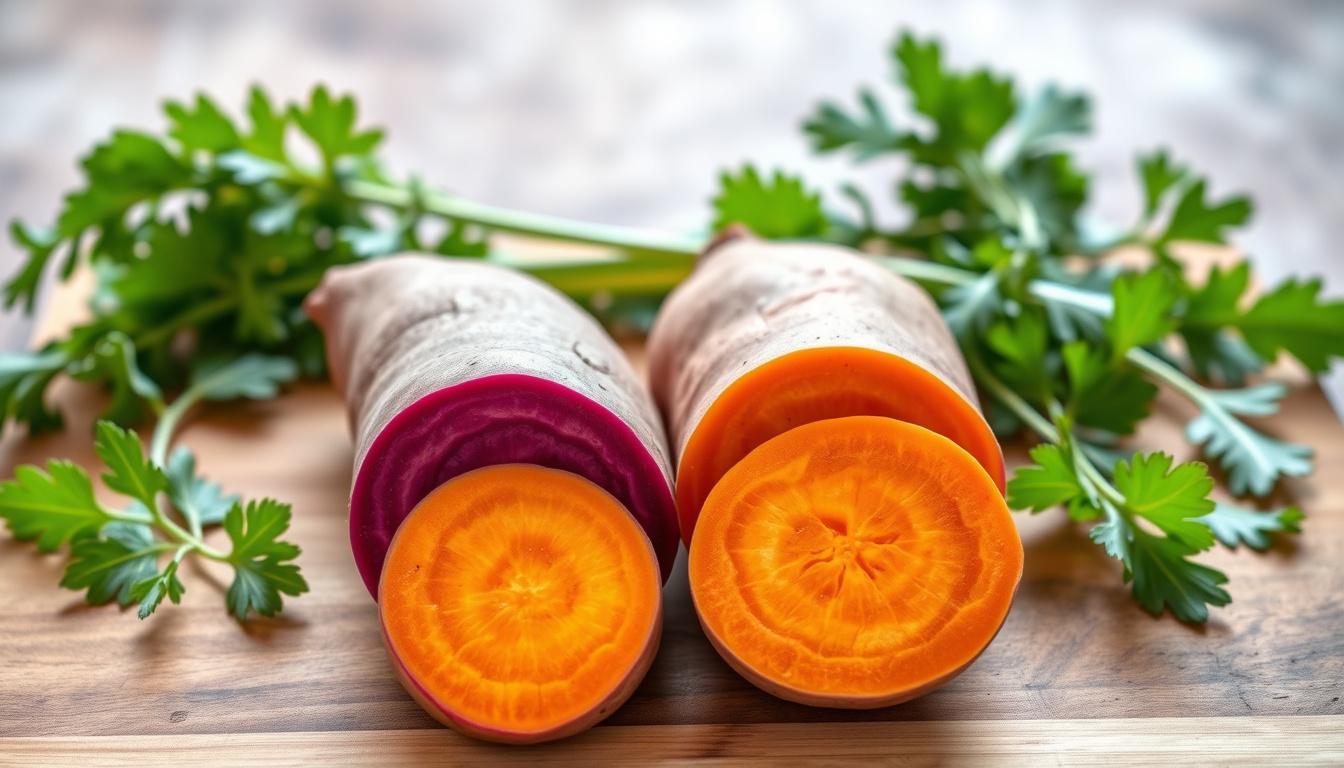
The purple sweet potato you’re likely finding in Irish shops is most often the Murasaki type — a Japanese variety with dark purple skin and creamy white flesh inside. That’s the opposite of what many people expect when they hear “purple potato,” since the color lives in the skin rather than the flesh.
Three specific varieties — XS, ZL, and JS18 — have been flagged in PMC research as particularly suitable for diabetic diets due to their nutrient profiles. The Murasaki you’re most likely to spot fits comfortably in that company.
Cooking methods
How you cook matters. Steaming preserves nutrients better than frying or mashing, according to Sinocare, which is worth noting for anyone watching their blood sugar. You can roast, bake, boil, or mash them — but boiling and steaming tend to hold the line on the glycemic impact.
The flavor is milder and nuttier than you’d expect from an orange sweet potato, with a denser texture. That makes them versatile: they hold up in stews, work as a side dish, and can anchor a nutrient-dense mash without the overpowering sweetness of some varieties.
Purple sweet potatoes cost more and take longer to find in Ireland than standard varieties. Asia Market and specialty grocers stock them — a small premium for a meaningfully different nutritional profile.
What’s the difference between a sweet potato and a purple sweet potato?
Color and flavor
The most obvious difference is cosmetic, but it runs deeper than looks. Orange sweet potatoes bring beta-carotene as their star nutrient — the compound that gives them their color and supports eye health. Purple sweet potatoes bring anthocyanins instead, the same antioxidants found in berries, grapes, and red cabbage.
Flavor-wise, purple varieties are subtler. The Healthline describes purple potatoes as having a denser texture and nuttier flavor compared to white potatoes. Orange sweet potatoes tend toward sweeter, more pronounced earthiness that some people prefer for certain dishes.
Nutrition differences
Both are carbohydrate foods, and both sit in the higher-GI range — but purple has the edge. Purple potatoes score 77 on the glycemic index, according to a 2014 study cited by Healthline. That’s lower than yellow potatoes at 81 and white potatoes at 93. The difference matters for blood sugar management.
Sanitarium frames it clearly: orange sweet potatoes are richest in beta-carotene, while purple varieties win on anthocyanins. Both aid health and disease prevention — they’re just emphasizing different nutrients.
Comparing nutritional claims between varieties requires matching the metric. Claims that purple is “healthier” are only meaningful if you specify the health goal — better antioxidants for one person, more beta-carotene for another.
The pattern is clear: purple and orange split the nutritional honours, with purple favored for antioxidant density and orange for beta-carotene. For anyone with blood sugar concerns, purple’s lower GI gives it the edge.
Can a diabetic have sweet potatoes?
Glycemic impact
The short answer is yes — in moderation, sweet potatoes can fit into a diabetic-friendly eating pattern. Both sweet and purple sweet potatoes have high glycemic index scores, but they’re still better choices than staples like rice (GI 83) or steamed buns (GI 88), according to Sinocare. The fiber advantage sweet potatoes carry helps with satiety and blood sugar regulation.
The University of California confirms that sweet potatoes, including purple and orange varieties, have a low glycemic index compared to other carbohydrate-rich foods — a framing that may surprise people who associate all potatoes with blood sugar spikes.
Best varieties for blood sugar
For someone managing diabetes, purple sweet potatoes offer a reasonable case. Anne Danahy, MS, RDN, writing for Healthline, notes that “purple potatoes may have less of an effect than other types due to their lower glycemic index and higher concentration of polyphenol plant compounds.” The polyphenols — including anthocyanins — appear to moderate how the body absorbs starch.
Portion control is the other lever. Sinocare suggests 90g of sweet potato as roughly equivalent to 25g of rice for those tracking carbs carefully. That’s a usable guide for meal planning.
No Ireland-specific diabetes guidelines distinguish between purple and orange sweet potatoes. General recommendations for low-GI carbs apply. If you’re managing diabetes, check with your healthcare team about incorporating any sweet potato variety.
Which color sweet potato is best for diabetics?
Purple vs orange vs others
Looking purely at the evidence, purple sweet potatoes have a reasonable claim to being the better choice for blood sugar management. The GI data favors purple at 77 compared to orange, though the exact GI for orange varieties isn’t as cleanly documented in the available research. Sanitarium emphasizes that both colors “aid health and disease prevention,” which is worth remembering.
The anthocyanin content in purple varieties adds a layer of benefit beyond GI numbers. Research from PMC identifies antidiabetic properties in purple-fleshed sweet potatoes tied to these compounds. Orange varieties don’t offer the same anthocyanin advantage — they compensate with beta-carotene instead.
Evidence from sources
The Healthline analysis points to a 4-week study where purple potatoes reduced systolic blood pressure by 3.5% and diastolic by 4.3% in participants with elevated blood pressure. Lower blood pressure is a meaningful secondary benefit for anyone managing diabetes, since cardiovascular risk goes hand in hand with blood sugar management.
The University of California study highlights that anthocyanins are known for anti-diabetic, anti-cancer, anti-inflammatory, and antimicrobial properties — a substantial set of benefits from a single compound family.
For Irish diabetics weighing their carb choices, purple sweet potatoes offer a credible case beyond the standard orange option. The lower GI combined with anthocyanin content gives them a two-pronged advantage — assuming portion sizes stay controlled.
Five sweet potato varieties worth comparing head to head, with their key differentiating traits on the metrics that matter most for health-conscious and diabetic-aware eating.
| Variety | Key Antioxidant | GI Approx. | Vitamin C |
|---|---|---|---|
| Purple sweet potato (Murasaki) | Anthocyanins (500 mg/cup) | 77 | 2× regular potatoes |
| Orange sweet potato | Beta-carotene | High (exact value varies) | Moderate |
| Yellow potato | Lutein | 81 | Low |
| White potato | None specific | 93 | Low |
| Okinawan purple | Anthocyanins (high) | Low-mod | High |
Both sweet and orange varieties improve insulin sensitivity and fight inflammation due to their antioxidant content, based on available research — though clinical trial data specific to diabetes patients remains limited.
Confirmed
- Purple sweet potatoes have higher antioxidants than orange varieties
- Purple potato GI of 77 is lower than white potato at 93
- Anthocyanins in purple varieties linked to anti-inflammatory and anti-diabetic properties
- Steaming and boiling preserve nutrients better than frying
- Both sweet potato colors are better than rice or steamed buns on GI when fiber is factored
Unclear
- Exact GI difference between purple and orange sweet potatoes (orange data less consistent)
- Long-term diabetes outcomes from regular purple sweet potato consumption
- Whether specific Ireland diabetes guidelines would recommend one color over the other
- Optimal portion sizes for diabetics eating purple sweet potatoes regularly
Purple potatoes may have less of an effect than other types due to their lower glycemic index and higher concentration of polyphenol plant compounds.
— Anne Danahy, MS, RDN, writing for Healthline
Anthocyanins are known for their anti-diabetic, anti-cancer, anti-inflammatory and antimicrobial properties.
— University of California
Related reading: Bristol Stool Chart · Slow Cooker Chicken Times
Purple sweet potatoes suit diabetics particularly well, just like the diabetic-friendly sweet potato recipes that showcase their lower glycemic advantages in everyday meals.
Frequently asked questions
Does sweet potato help with menopause?
Sweet potatoes contain nutrients that may support women through menopause — particularly beta-carotene in orange varieties for bone health and anthocyanins in purple varieties for inflammation. However, no direct clinical evidence specifically targets sweet potato consumption for menopause symptom management, so additional research would help clarify these potential benefits.
What are the top 3 healthiest potatoes?
Based on available evidence, purple sweet potato, Okinawan purple potato, and orange sweet potato tend to rank highest. Purple leads on antioxidants and lower GI; orange leads on beta-carotene; both outperform white and yellow potatoes on nutrient density — though the exact ranking depends on which nutrients you prioritise.
When not to eat purple sweet potatoes?
Avoid purple sweet potatoes if they show signs of mold, soft spots, or a sulfurous smell — all indicators of spoilage. Sweet potatoes contain oxalates, so those with a history of oxalate kidney stones may want to monitor their intake and consult a healthcare provider about appropriate portion sizes.
How to tell if a sweet potato is bad?
Look for firm, smooth skin without wrinkles, cracks, or dark spots. Soft or mushy areas, mold, or an off smell mean it’s time to compost it. Purple sweet potatoes should feel heavy for their size — lightness suggests drying out.
Where to buy purple sweet potatoes Ireland?
Asia Market in Dublin stocks Japanese Murasaki purple sweet potatoes. Green Earth Organics and specialty import shops are other options. Mainstream supermarkets carry them less consistently, though availability improves around autumn and winter months.
Are purple sweet potatoes good for holiday meals?
Purple sweet potatoes make a striking addition to holiday tables — their vivid color holds well when roasted or mashed with minimal processing. Sanitarium named purple sweet potato the 2024 veggie of the year partly for this versatility.
What food to avoid with diabetes?
People managing diabetes are typically advised to limit refined carbohydrates, sugary drinks, processed snacks, and high-GI starches. Sweet potatoes — including purple varieties — sit in a middle zone: they have GI concerns but offer fiber and nutrient advantages over more refined options.

Andrew Patel leads fact-checking, source verification and corrections at Downunder Brief.