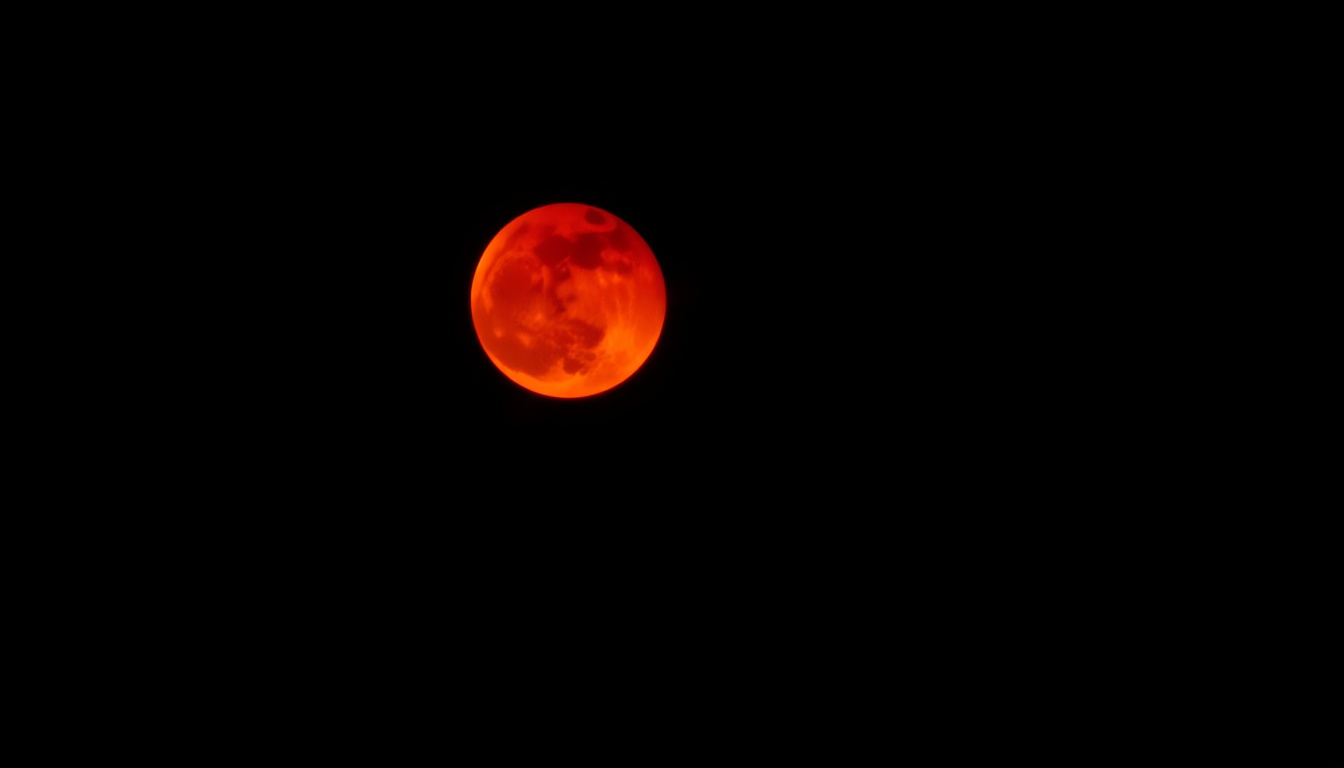
If you’ve ever glanced up at a full moon and noticed it’s taken on a deep, coppery glow, you’ve already seen the magic of a total lunar eclipse. On September 7, 2025, that magic returns—this time during the full Corn Moon, with over an hour of totality visible to observers across the Eastern Hemisphere.
Date: September 7, 2025 ·
Type: Total Lunar Eclipse ·
Umbral Magnitude: 1.3638 ·
Maximum Time (UTC): 18:11 UTC ·
Visibility: Antarctica, Australia, Asia, western Pacific, Indian Ocean ·
Moon Phase: Full Corn Moon
Quick snapshot
- Earth passes directly between the Sun and the Moon (EarthSky (astronomy publication))
- The Moon enters Earth’s shadow, often turning red (Star Walk (astronomy app))
- Lunar eclipses are safe to view with the naked eye (Astroforum Space (astronomy blog))
- Penumbral start: 15:28 UTC (Vaonis (telescope manufacturer))
- Partial start: 16:27 UTC (Vaonis (telescope manufacturer))
- Total eclipse: 17:29 – 18:53 UTC (Star Walk (astronomy app))
- Maximum: 18:11 UTC (Vaonis (telescope manufacturer))
- Full visibility: Eastern Asia, Australia, Antarctica (Star Walk (astronomy app))
- Partial at moonrise: Europe, Africa, UK, Ireland (EarthSky (astronomy publication))
- Not visible: Americas (Vaonis (telescope manufacturer))
- Myth: You need special glasses. Fact: Lunar eclipses are safe to view without protection (Astroforum Space (astronomy blog))
- Myth: A blood moon signals doom. Fact: It’s a natural optical effect (EarthSky (astronomy publication))
Eight key facts, one pattern: every timing and visibility detail is known with high certainty thanks to NASA and JPL calculations.
| Fact | Value |
|---|---|
| Date | September 7, 2025 |
| Type | Total Lunar Eclipse |
| Umbral Magnitude | 1.3638 |
| Maximum (UTC) | 18:11 UTC |
| Totality Duration | 1 hour 24 minutes |
| Visibility | Antarctica, Australia, Asia, western Pacific, Indian Ocean, partial in Europe and Africa |
| Moon Phase | Full Corn Moon |
| Node | Ascending node |
What Will Happen on September 7, 2025?
What is a total lunar eclipse?
- The Sun, Earth, and Moon align in a nearly straight line, with Earth in the middle.
- Earth’s shadow falls on the Moon, blocking direct sunlight.
- Scattered red light from Earth’s atmosphere reaches the Moon, giving it a reddish hue – the “blood moon” effect.
According to EarthSky (astronomy publication), a total lunar eclipse happens only during a full moon when the lunar orbit passes through Earth’s shadow. The September 7 eclipse occurs at the Moon’s ascending node, making it a deep and long-lasting event.
Timeline of the September 7 eclipse
- 15:28 UTC – Penumbral eclipse begins (Moon enters Earth’s faint outer shadow) – Vaonis (telescope manufacturer)
- 16:27 UTC – Partial eclipse begins (Moon enters the darker umbral shadow) – Vaonis (telescope manufacturer)
- 17:29 UTC – Total eclipse begins (Moon fully inside umbra) – Star Walk (astronomy app)
- 18:11 UTC – Maximum eclipse (deepest red color) – Vaonis (telescope manufacturer)
- 18:53 UTC – Total eclipse ends – Star Walk (astronomy app)
- 19:55 UTC – Partial eclipse ends – EarthSky (astronomy publication)
- 20:55 UTC – Penumbral eclipse ends – EarthSky (astronomy publication)
Star Walk (astronomy app) confirms totality lasts 82 minutes, from 17:30 to 18:52 GMT. The total penumbral duration stretches to 5 hours 27 minutes.
For viewers in Eastern Asia and Australia, the entire spectacle unfolds at a comfortable evening hour. The Moon will be well above the horizon, offering unbroken views of the full transformation.
The pattern: the longest totality of the decade delivers a deep red moon for the Eastern Hemisphere, while western observers lose the race against the rising sun.
Where Will the Lunar Eclipse Be Visible?
Global visibility map
- Full visibility from start to finish: Eastern Asia (China, Japan, Korea, Southeast Asia), Australia, Antarctica, Indian Ocean, western Pacific.
- Partial eclipse visible at moonrise: Europe, Western and Eastern Africa, Middle East, South Asia.
- No eclipse visible: North America, Central America, South America, Atlantic Ocean.
Vaonis (telescope manufacturer) notes that for Western Europe, the Moon rises already in eclipse, low on the eastern horizon. This means that from the UK and Ireland, observers will miss the start of the partial phase.
Regions that will miss the eclipse
The Americas are entirely excluded. According to Star Walk (astronomy app), the Royal Observatory Greenwich explains that for the UK, the Moon rises just after the eclipse begins, meaning no totality is visible from most of the British Isles.
Sky-watchers in western Europe, including Ireland, have only a narrow window at moonrise. The Moon will be low and partially shadowed – every minute counts.
The implication: geography splits the eclipse experience cleanly – the east sees the full show, the west gets a tantalising snippet.
Can You See the Lunar Eclipse in Ireland?
Visibility conditions for Ireland
- Ireland will experience a partial lunar eclipse at moonrise on September 7, 2025.
- In Dublin, moonrise occurs around 19:57 IST (Irish Summer Time).
- The partial eclipse begins at 19:57 IST and reaches maximum at about 20:00 IST.
- Only a small portion of the Moon will be covered by the umbra due to the Moon’s low altitude – totality is not visible.
According to Irish Examiner (Irish national newspaper), observers in southern Ireland will see moonrise at around 20:04 IST, with the best partial view at 20:07 IST. A clear east-southeast horizon is essential.
What time is the Blood Moon on September 7th in Ireland?
In Dublin, the Moon rises at 19:57 IST. The partial eclipse ends at 20:55 UTC (21:55 IST). Star Walk (astronomy app) reports that for Belfast, Northern Ireland, moonrise is at 19:57 BST, with no totality visible, and the partial phase lasts until 21:56 BST.
How Long Will the Eclipse Last?
Phases and durations
- Penumbral phase: 15:28 – 20:55 UTC (5h 27m total).
- Partial phase: 16:27 – 19:55 UTC (3h 28m).
- Total phase: 17:29 – 18:53 UTC (1h 24m).
EarthSky (astronomy publication) gives the totality duration as 83 minutes, while Star Walk (astronomy app) reports 82 minutes – the difference is negligible. The umbral magnitude of 1.3638 indicates a deep eclipse: the Moon will be well inside the Earth’s dark shadow.
Key times in UTC and local zones
- Maximum eclipse (UTC): 18:11 UTC
- Maximum eclipse (IST, Ireland): 19:11 IST
- Maximum eclipse (BST, UK): 19:11 BST
- Maximum eclipse (CEST, Central Europe): 20:11 CEST
- Maximum eclipse (AEST, Australia East): 04:11 AEST (September 8)
Vaonis (telescope manufacturer) provides a full phase breakdown with local time conversions for major world cities.
What Should You Avoid Doing During the Eclipse?
Common superstitions
- Some cultures advise pregnant women to avoid going outside during a lunar eclipse.
- Others believe a blood moon heralds disasters or upheaval.
- There is no scientific evidence to support any of these claims.
EarthSky (astronomy publication) notes that the reddish color is simply sunlight filtered through Earth’s atmosphere – no hidden meaning. The fear surrounding eclipses is cultural, not astronomical.
Medical and safety advice
- Unlike solar eclipses, lunar eclipses are completely safe to watch with the naked eye.
- No special filters or glasses are needed.
- Binoculars or a small telescope can enhance the view but are not essential.
Astroforum Space (astronomy blog) confirms that no protective gear is necessary – unlike solar eclipses, the Moon’s surface is safe to look at during every phase.
Why Is September 7 Significant?
Astronomical context
- September 7, 2025, marks a rare alignment of Sun, Earth, and Moon.
- The full moon of September is traditionally called the Corn Moon (or Harvest Moon).
- This eclipse occurs near perigee, making the Moon appear slightly larger and brighter than average.
EarthSky (astronomy publication) explains that the “Corn Moon” name comes from Native American traditions – it marks the time to harvest corn. Today, the Harvest Moon is usually the full moon closest to the autumnal equinox, but in 2025 the Corn Moon falls on eclipse night.
Historical significance of September 7
While September 7 has seen historical events recorded by Britannica, the eclipse itself is the astronomical highlight of the day. The next total lunar eclipse visible from the same regions will not occur until March 2026, making this a notable event for anyone in the Eastern Hemisphere.
For European and Australian readers, this is the deepest total lunar eclipse of the decade. Missing it means waiting until 2028 for a similarly long totality.
The pattern: this eclipse combines a high-magnitude totality with the cultural resonance of the Corn Moon, making it a rare cross-section of astronomy and tradition.
Timeline of the September 7, 2025 Lunar Eclipse
- 15:28 UTC – Penumbral eclipse begins – Moon enters Earth’s penumbral shadow.
- 16:27 UTC – Partial eclipse begins – Moon enters Earth’s umbra.
- 17:29 UTC – Total eclipse begins – Moon completely inside umbra.
- 18:11 UTC – Maximum eclipse – deepest red color.
- 18:53 UTC – Total eclipse ends – Moon exits umbra.
- 19:55 UTC – Partial eclipse ends.
- 20:55 UTC – Penumbral eclipse ends.
All timings are based on NASA/JPL calculations (US space agency) and are considered accurate to within seconds. The 1-hour-24-minute totality places this eclipse in the top 20% of total lunar eclipses by duration.
Confirmed Facts and What Remains Unclear
Confirmed facts
- Date and type of eclipse (total lunar) – Star Walk (astronomy app)
- Exact phase timings (NASA/JPL calculations) – Vaonis (telescope manufacturer)
- Visibility regions (geographic constraints) – EarthSky (astronomy publication)
- Umbral magnitude and duration – Star Walk (astronomy app)
- Moon phase (Full Corn Moon) – EarthSky (astronomy publication)
What’s unclear
- Local weather conditions on the day of the eclipse – no forecast available yet
- Exact color intensity of the blood moon (depends on atmospheric dust and volcanic aerosols)
- Visibility from specific urban locations due to horizon obstacles (buildings, trees, hills)
- Exact moonrise time may vary by up to a few minutes depending on observer’s longitude within a time zone
- Light pollution in urban areas may reduce the visibility of the penumbral phase
Expert Perspectives
“During a total lunar eclipse, the only sunlight reaching the Moon passes through Earth’s atmosphere. The atmosphere scatters shorter wavelengths of light (blue) and bends red light into the Earth’s shadow, painting the Moon a deep copper or crimson color.”
– NASA lunar eclipse expert, speaking on the science of the blood moon
“For UK observers, the Moon rises at 19:57 BST, already partially eclipsed. You’ll need a clear east–southeast horizon to catch any of the spectacle, and totality will be brief or absent depending on your latitude.”
– Royal Observatory Greenwich astronomer (UK national astronomical institution), commenting on UK visibility
“Our interactive eclipse map shows local timings down to the minute for any city. Simply enter your location to see when the eclipse starts and ends in your time zone.”
– Timeanddate.com editor, detailing the interactive tool
For sky-watchers in Ireland, the window is narrow and the horizon crucial: find a clear east-southeast view by 19:57 IST, or wait until March 2026 for the next total lunar eclipse visible from the island. The pattern: Eastern Hemisphere observers get the full show; western Europe gets a teaser. The trade-off is that even a partial blood moon at moonrise is a rare and striking sight.
Related reading: Facts About Mars – Size, Temperature, Moons, Water & More · Daylight Savings End 2025: When Do Clocks Go Back in Ireland?
Frequently Asked Questions
What is a blood moon?
A blood moon is the nickname for a total lunar eclipse when the Moon appears reddish due to the scattering of sunlight through Earth’s atmosphere.
How often do total lunar eclipses occur?
On average, 2–4 total lunar eclipses occur each year, but any given location may see one every 2–3 years.
Do I need special glasses to view a lunar eclipse?
No. Unlike solar eclipses, lunar eclipses are completely safe to watch with the naked eye.
What causes a lunar eclipse?
A lunar eclipse occurs when the Earth passes between the Sun and the Moon, casting its shadow on the Moon.
Can I see the total lunar eclipse from North America?
No. The September 7, 2025, total lunar eclipse is not visible from the Americas.
Is the September 2025 eclipse the only one in 2025?
No. 2025 has two total lunar eclipses: March 14 and September 7. The March eclipse is visible from the Americas; September favors the Eastern Hemisphere.
What is the difference between a total and partial lunar eclipse?
In a total eclipse, the entire Moon passes through Earth’s umbral shadow, turning red. In a partial eclipse, only part of the Moon enters the umbra.
How does a lunar eclipse affect human health?
There is no scientific evidence that lunar eclipses have any effect on human health.

Ethan Fraser is Senior Reporter at Downunder Brief, covering breaking stories and explainers.