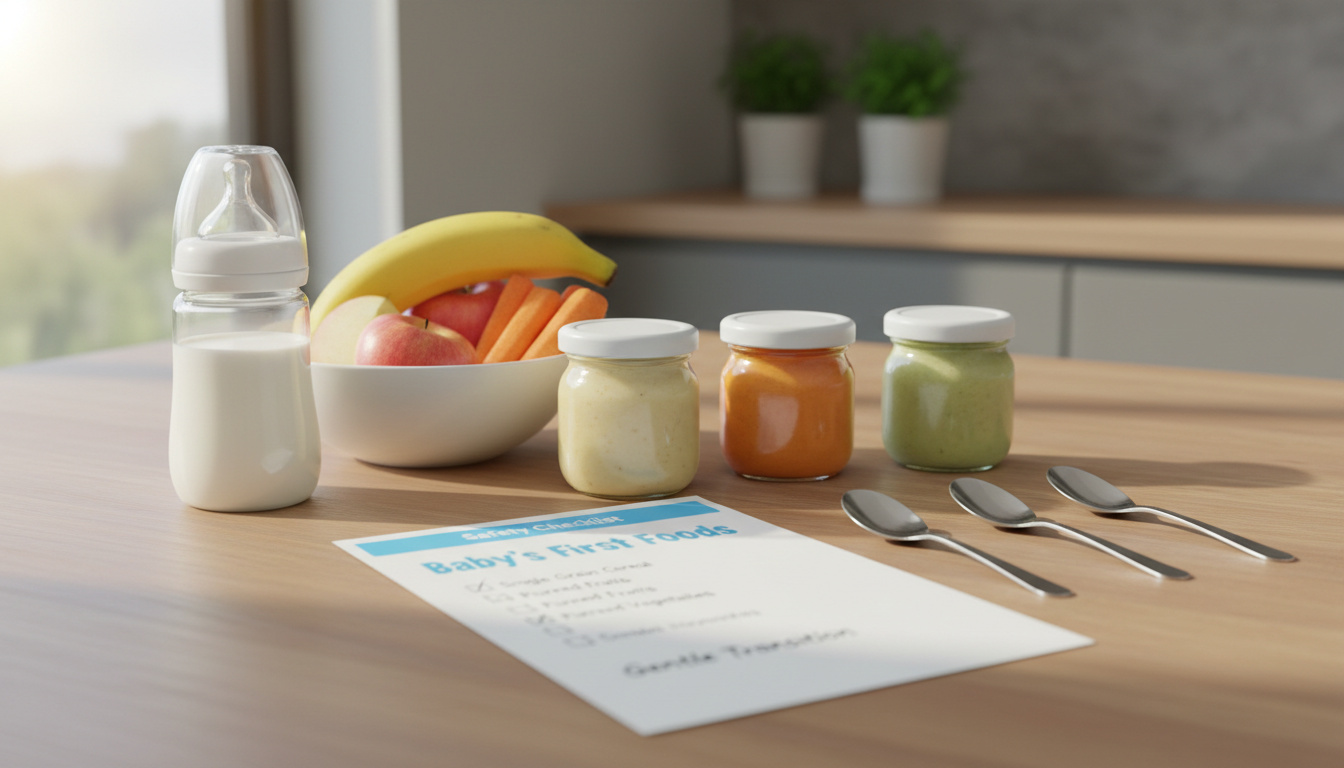
The transition from exclusive milk feeding to solid foods represents a significant developmental milestone for infants and a navigational challenge for parents. Current pediatric guidelines establish approximately six months as the typical window for introducing complementary foods, though individual readiness varies based on specific physical and behavioral cues.
This period requires balancing nutritional needs with developmental capabilities. Parents must coordinate milk feeds with new textures while monitoring for allergies and ensuring safety.
Understanding the evidence-based timeline, recognizing readiness signals, and implementing structured weaning strategies helps families manage this transition effectively without compromising infant nutrition or maternal milk supply.
When Is My Baby Ready to Start Solid Foods?
Most infants display developmental readiness for complementary feeding around six months of age. The CDC and American Academy of Pediatrics advise exclusive breastfeeding or formula until this point, with solids not introduced before four months.
- Postural Control: Sitting independently or with minimal support indicates physical readiness for safe swallowing.
- Oral Motor Skills: Loss of the tongue-thrust reflex allows the infant to swallow food rather than pushing it out.
- Behavioral Interest: Opening the mouth when food approaches and tracking family meals with attention.
- Manual Coordination: Bringing objects to the mouth and grasping small items demonstrates hand-eye coordination.
Key Developmental Indicators
- Typical readiness emerges at six months, with some infants showing cues as early as four months or as late as seven months.
- The infant must sit upright with support to prevent choking and facilitate proper swallowing mechanics.
- Opening the mouth when food is offered signals cognitive engagement with the feeding process.
- Current guidelines explicitly recommend against introducing solids before four months as outdated practice.
- Interest in family food and reaching for table items indicates social readiness for shared meals.
- Swallowing capability replaces the infant’s natural tendency to push foreign objects from the mouth.
- Fine motor development allows grasping small items, prerequisite for self-feeding attempts.
| Parameter | Standard | Source Basis |
|---|---|---|
| Typical Introduction Age | 6 months | CDC/AAP Guidelines |
| Earliest Safe Consideration | 4 months | Developmental Variance |
| Latest Normal Range | 7 months | Individual Development |
| Required Postural Skill | Sitting with minimal support | Physical Safety |
| Oral Motor Milestone | Tongue-thrust reflex disappears | Swallowing Safety |
| Behavioral Readiness | Interest in family meals | Social Cues |
| Initial Feeding Position | Upright seated | Choking Prevention |
| Milk Nutrition Priority | Exclusive until 6 months | Nutritional Requirements |
| Starting Frequency | 1 feeding daily | Gradual Introduction |
| Initial Texture | Smooth, semi-liquid purees | Developmental Appropriateness |
| Starting Volume | Few teaspoons | Digestive Adaptation |
| Allergy Monitoring Protocol | One new food weekly | Safety Surveillance |
Specific developmental cues include sitting up alone or with minimal support, opening the mouth when food is offered, and demonstrating the ability to swallow rather than push food out. Observational research confirms that bringing objects to the mouth and grasping small items correlates strongly with feeding readiness.
How Should I Introduce the First Foods?
Breast milk or formula remains the primary nutrition source until twelve months. Solids function initially as developmental supplements rather than caloric replacements.
Scheduling and Milk Integration
Offer solid foods thirty to ninety minutes after milk feeds when the infant is content but hungry. This timing allows energy from milk while creating appetite for new textures. Begin with one feeding daily, typically mid-morning or dinner, using a few teaspoons of smooth, semi-liquid purees. Pediatric nutritionists emphasize that milk feeds should precede solids to maintain supply.
Nurse or offer the bottle first, then present solid foods. This sequence maintains maternal milk supply while allowing the infant to practice new eating skills when content but not ravenous. Video demonstrations illustrate this timing technique effectively.
Texture Progression and Portion Control
Start with single-ingredient smooth purees at oatmeal-thin consistency. Rice cereal offers iron supplementation with low allergy risk. Progress to vegetables before fruits to establish savory preferences, then introduce meats at six to seven months. Increase volume gradually as motor skills develop, allowing the infant to determine portion limits through natural hunger cues.
What Does the Weaning Process Involve?
Weaning describes the gradual replacement of milk feeds with solid foods, beginning at six months but prioritizing solids over milk only after twelve months. Fully weaned status occurs when milk stops entirely—a personal choice based on work requirements, infant readiness, or maternal wellbeing.
Gradual Feed Replacement
Replace the least-favored feeding session first, typically avoiding morning or bedtime feeds initially to maintain emotional comfort. Introduce a cup with lid between six and nine months to establish independent drinking skills. Gastroenterology specialists recommend gradual reduction to prevent engorgement.
Managing Physical and Emotional Adjustments
Sudden cessation risks painful engorgement; pump for comfort if needed and consult a lactation expert for blocked ducts. Expect temporary regressions during illness or teething episodes; resume the established routine after recovery. Parents should approach Starting Solids as a flexible process responsive to the infant’s developmental trajectory.
Which Foods Are Safe and Appropriate?
Initial offerings require single-ingredient composition and smooth texture to minimize choking risks and isolate allergic reactions.
Recommended First Foods
Iron-fortified rice cereal serves as a common starter due to its smooth texture and minimal allergenic potential. Pureed vegetables—carrots, peas, or sweet potatoes—establish healthy flavor preferences before sweeter fruits. Homemade preparations should blend to puree consistency; commercial options are acceptable alternatives. Avoid spices initially and ensure pieces remain smaller than a fingertip.
Whole grapes, hot dogs, and sharp or hard foods present significant choking risks for infants learning to manage solids. Johns Hopkins Medicine explicitly warns against bottle-mixed food and whole cow’s milk before twelve months.
Introduce one new food weekly to isolate potential triggers. Watch for skin rashes, respiratory changes, or gastrointestinal distress within hours of consumption. Start with maximum two-ounce portions to limit reaction severity if sensitivity exists.
Safety Parameters
Never introduce solids before four months. Avoid mixing food with bottles, which encourages overconsumption and prevents proper oral motor development. Continue offering previously rejected foods ten to twelve times before determining true dislike. Weaning safety requires constant supervision during meals and age-appropriate seating.
What Is the Typical Transition Timeline?
Developmental progression follows predictable phases while accommodating individual variation in appetite and skill acquisition.
- 4-6 Months: First smooth purees introduced once daily, focusing on single-ingredient iron-rich options.
- 6-9 Months: Increased food volume and texture variety; introduction of cup drinking for water; continued milk priority.
- 9-12 Months: Larger portions matching family food textures; three meals daily possible; breast milk or formula remains nutritional primary.
- Post-12 Months: Solid foods assume priority nutritional role; gradual phase-out of milk feeds according to family preference and pediatric guidance.
Pediatric milestones emphasize that volumes and skills vary significantly between infants; professional consultation provides personalized benchmarks. If you’re looking for guidance on how to choose a baby stroller, this resource can help. cómo elegir cochecito bebé
What Guidelines Are Definitive Versus Variable?
| Established Medical Consensus | Individual Family Variations |
|---|---|
| Exclusive breastfeeding or formula until 6 months (CDC/AAP) | Exact day to start within 4-7 month readiness window |
| No solid foods before 4 months | Specific weaning timeline and duration |
| Milk remains primary nutrition until 12 months | Choice between purees or baby-led weaning approaches |
| Iron-rich foods recommended as first solids | Quantity of solids consumed per feeding |
| Specific choking hazards (whole grapes, hot dogs, hard items) | Whether to use store-bought or homemade preparations |
| One new food weekly for allergy monitoring | Which specific foods to introduce first (rice vs. vegetables) |
Why Does the Transition Timing Matter?
Physiological iron stores deplete around six months, necessitating dietary supplementation from solid foods. Earlier introduction correlates with increased obesity and allergy risks, while delayed introduction beyond seven months may delay oral motor development and micronutrient acquisition.
The twelve-month milk priority protects renal function and ensures adequate fat intake for neurological development. Premature replacement with cow’s milk risks iron deficiency anemia and intestinal irritation.
Coordinated timing preserves maternal milk supply through gradual demand reduction, preventing painful engorgement or premature lactation cessation when continuation is desired.
What Do Health Authorities Recommend?
Current guidelines from the American Academy of Pediatrics and CDC recommend exclusive breastfeeding or formula until 6 months, with solids not before 4 months, as earlier introduction is outdated and not advised.
CDC Infant & Toddler Nutrition Guidelines
Breast milk or formula remains the primary nutrition source until 12 months; solids start as supplements offered 30-90 minutes after milk feeds when baby is content but hungry.
Capital Area Pediatrics Nutritional Guidelines
How Can Parents Navigate This Transition Confidently?
Follow the infant’s developmental cues rather than calendar dates alone, maintaining milk as the primary nutrition source for the first year. Introduce single-ingredient foods gradually while monitoring for adverse reactions, prioritize safety through appropriate texture modification, and consult pediatricians or lactation specialists for individualized guidance when challenges arise. Resources like Starting Solids provide additional structured protocols for this transition.
Frequently Asked Questions
Can I start solids before my baby is 4 months old?
No. Current guidelines from the CDC and American Academy of Pediatrics advise against introducing solids before 4 months, as infants lack the developmental readiness and early introduction may pose health risks.
How do I know if my baby is having an allergic reaction to new food?
Monitor for skin rashes, vomiting, diarrhea, or respiratory changes within minutes to hours of introduction. Introduce one new food weekly to isolate potential triggers and consult a pediatrician immediately concerning symptoms.
Should I give my baby rice cereal or vegetables first?
Either is appropriate. Rice cereal provides iron supplementation with low allergy risk, while vegetables establish savory preferences. The key is single-ingredient, smooth textures initially.
Can I put solid food in my baby’s bottle?
No. Mixing food with bottles is not recommended. Infants should consume solids from a spoon or appropriate finger foods to develop proper oral motor skills and prevent choking hazards.
How much solid food should a 6-month-old consume?
Begin with a few teaspoons once daily, gradually increasing as skills develop. Follow the infant’s hunger cues rather than predetermined volumes, keeping milk as the primary nutrition source.
What should I do if my baby refuses solid foods?
Continue offering without pressure. Retry rejected foods 10-12 times, as acceptance often requires repeated exposure. Maintain milk feeds and consult a pediatrician if refusal persists beyond developmental readiness periods.
When can my baby drink water from a cup?
Offer water in a sippy cup beginning between 6-9 months during solid feedings to establish cup drinking skills, though milk remains the primary fluid source until 12 months.

Marc Thompson is Managing Editor at Downunder Brief, overseeing daily newsroom workflow, commissioning and headline review.