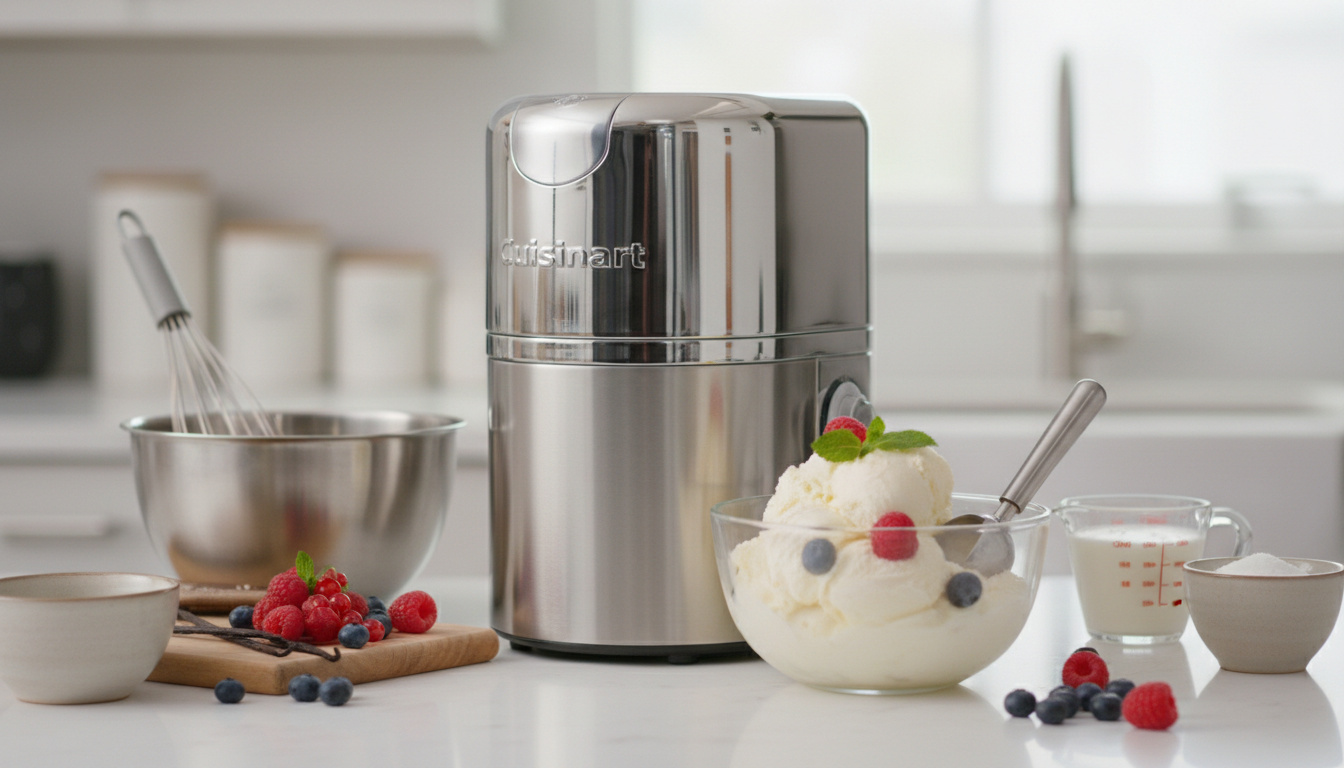
Cuisinart ice cream makers have dominated home frozen dessert preparation for over two decades, offering a range of freezer-bowl models that balance affordability with professional results. The current lineup centers on three primary machines—the ICE-21, ICE-30BC, and ICE-70—each employing a rotating bowl mechanism rather than a stationary paddle to churn ice cream, sorbet, and gelato. Understanding the specific capabilities and limitations of each model ensures home cooks invest in equipment matched to their batch size needs and texture preferences.
Independent testing consistently demonstrates that these machines produce superior results compared to basic competitors, though performance varies significantly based on bowl rotation speed and capacity. The technology relies on pre-frozen, double-insulated bowls that eliminate the need for ice and salt, though this convenience requires advance planning.
What Is the Best Cuisinart Ice Cream Maker?
Selecting the optimal model requires balancing capacity constraints against budget limitations and desired texture outcomes. While all three primary models produce high-quality frozen desserts, their mechanical differences yield distinct results.
| Top Model | Capacity | Price Range | Best For |
|---|---|---|---|
| ICE-21 | 1.5 quarts | $70-80 | Small batches, beginners |
| ICE-30BC | 2 quarts | $80-100 | Versatile home use |
| ICE-70 | 2 quarts | $150-200 | Customization, families |
Current testing reveals several critical performance distinctions between these units:
- The ICE-30BC produces “top quality” results nearly matching compressor models while costing significantly less, according to 2024 evaluations
- ICE-21 operates at 32 RPM, creating higher overrun (~40% air content) for lighter, fluffier textures
- ICE-30BC rotates at 21 RPM, yielding denser, creamier results with approximately 27% overrun
- ICE-70 offers variable speed settings adjustable for specific dessert types
- Bowls for ICE-30BC and ICE-70 are interchangeable, while ICE-21 uses a lighter, smaller bowl (1545g versus 2090g)
- All models carry a standard three-year warranty
- Freezer bowl preparation requires identical 6-24 hour pre-freezing across the non-compressor line
| Feature | ICE-21 | ICE-30BC | ICE-70 |
|---|---|---|---|
| Capacity | 1.5 quarts | 2 quarts | 2 quarts |
| Bowl Rotation Speed | 32 RPM | 21 RPM | Variable settings |
| Typical Overrun | ~40% | ~27% | Adjustable |
| Average Churn Time | ~20 minutes | ~25 minutes | ~20 minutes or less |
| Resulting Texture | Light, smooth | Dense, creamy | Variable control |
| Operating Noise Level | Moderate | Moderate | Loudest |
| Current Retail Price | ~$70-80 | ~$90-100 | ~$150-200 |
| Interchangeable Bowl | No | Yes (with ICE-70) | Yes (with ICE-30BC) |
How Do You Use a Cuisinart Ice Cream Maker?
Proper technique determines whether these machines produce silky smooth desserts or icy, grainy disappointments. Success depends entirely on thermal management and timing.
Preparing the Freezer Bowl
The double-insulated freezer bowl requires minimum six hours of pre-freezing, though twenty-four hours ensures optimal performance. Users may store the bowl permanently in the freezer for spontaneous dessert making. The bowl must be frozen solid; a sloshing sound indicates insufficient freezing time.
Mixing and Churning Protocol
Chill prepared bases for at least two hours before churning. Assembly requires locking the paddle into the motorized unit before pouring mixture to the maximum fill line—approximately one quart for the ICE-21 and up to two quarts for larger models. Overfilling causes spillover and compromises freezing efficiency.
Smaller batches freeze faster and achieve smoother textures. Testing confirms that underfilling slightly produces better results than maxing out capacity, as the mixture contacts frozen surfaces more effectively.
Churning typically requires twenty to forty minutes, with the mixture reaching 21°F/-6°C at completion. The ICE-70 completes this process at least five minutes faster than the ICE-30BC due to an additional blade and tighter clearance gaps. Extraction timing determines overrun—removing the paddle early produces denser, gelato-style results.
Hardening and Storage
Transfer freshly churned desserts immediately to airtight containers for two to four hours of hardening. The machines produce soft-serve consistency directly from the bowl; proper hardening ensures scoopable texture.
Resolving Operational Issues
Icy or grainy textures typically indicate overfilling, insufficiently chilled base mixtures, or bowls lacking full freeze. Soft, runny results suggest the bowl thawed prematurely or churning continued too long, incorporating excessive air. All models generate noticeable noise due to motors mounted beneath rotating bowls, with the ICE-70 operating loudest according to user reports.
What Recipes Work Best with Cuisinart Ice Cream Makers?
These machines accommodate standard custard and Philadelphia-style bases without modification. Performance remains consistent across dairy and non-dairy applications.
Standard Formulations
Successful bases generally contain two to four cups of combined dairy, sweeteners, and flavorings. A tested vanilla foundation uses two cups heavy cream, one cup whole milk, three-quarters cup sugar, and two teaspoons pure vanilla extract. The machines handle alcohol-based recipes and mix-in incorporations during the final minutes of churning.
Alternative Desserts
All three models produce sorbets and frozen yogurt with equivalent proficiency to ice cream. Lower-fat mixtures freeze faster and may require reduced churning times to prevent over-aeration.
Texture Manipulation
Churn duration directly controls density. Shortened churning periods yield dense, Italian-style gelato, while extended aeration creates lighter American ice cream. The ICE-70 automates this through preset programs, though manual monitoring produces superior consistency.
ICE-70 users should disregard fixed timer presets such as the 25-minute ice cream setting. Judging completion by visual texture and internal temperature prevents over-churning and ensures optimal consistency.
Is a Cuisinart Ice Cream Maker Worth Buying?
For home users prioritizing quality over convenience, the Cuisinart line offers compelling value distinct from compressor-style competitors. The absence of expensive refrigeration components keeps entry costs accessible while maintaining output standards.
The Cuisinart ICE-30BC vs ICE-21 comparison reveals the ICE-30BC as the current recommendation for most households, delivering professional-grade density and capacity at mid-range pricing. Budget-conscious consumers or those with limited freezer space should consider the ICE-21, while the ICE-70 justifies its premium only for users requiring specific texture controls.
Freezer bowl models require dedicated freezer space and advance planning. Users lacking available freezer real estate or demanding immediate gratification should investigate compressor models instead, despite higher costs.
Comparative testing by independent review sites confirms these machines outperform similarly priced competitors in texture consistency and freezing speed. The Cuisinart ICE-30BC vs ICE-70 analysis demonstrates the ICE-30BC achieves results nearly indistinguishable from the more expensive unit for standard applications.
How Have Cuisinart Ice Cream Makers Evolved?
- Early 2000s: The ICE-21 established the freezable bowl standard for domestic ice cream production, introducing the rotating bowl mechanism that defines the category.
- 2010s: The ICE-30BC expanded capacity to two quarts and introduced improved paddle geometry, becoming the reference standard for non-compressor home machines.
- Late 2010s: The ICE-70 incorporated variable speed controls and preset programming, addressing demand for texture customization between ice cream and gelato.
- 2024: Comprehensive testing reaffirmed the ICE-30BC as the category leader for value, despite subsequent technological additions to the product line.
What Is Definite About Cuisinart Ice Cream Maker Performance?
| Established Facts | Remaining Uncertainties |
|---|---|
| Non-compressor models require 16-24 hour bowl pre-freezing | Exact recipe yields vary based on milk fat content and additive ratios |
| Three-year manufacturer warranty standard across ICE-21, ICE-30BC, and ICE-70 | Long-term motor durability beyond warranty coverage |
| Bowl interchangeability confirmed between ICE-30BC and ICE-70 | Individual freezer temperature variations affecting freeze times |
| ICE-70 produces fastest freeze times via additional blade design | Specific decibel measurements for noise regulation compliance |
The Context of Home Ice Cream Innovation
Cuisinart, established in 1971, pioneered domestic food processor technology before applying engineering expertise to frozen dessert equipment. The brand’s approach prioritizes accessibility over commercial-grade complexity, recognizing that most home users prefer intermittent use without dedicated appliance commitment.
The freezer bowl technology represents a deliberate compromise between compressor systems—which freeze bases autonomously—and traditional salt-and-ice methods. This middle path eliminates the mess of manual freezing while avoiding the $300+ price points of self-refrigerating units. Market positioning places Cuisinart against competitors like KitchenAid attachment bowls and Whynter compressor models, with Cuisinart dominating the sub-$200 segment through consistent performance benchmarks.
Expert Assessments and Testing Data
“The ICE-30BC represents the best balance for most home users, producing top quality results nearly matching pricier models while remaining inexpensive.”
“Cuisinart models consistently outperform basic competitors in home tests, with the ICE-30BC delivering the optimal combination of capacity, texture quality, and value.”
Which Model Should You Choose?
The ICE-30BC satisfies most households seeking reliable, high-quality ice cream production without premium pricing. Budget-conscious users or those prioritizing smaller batches should select the ICE-21, accepting the reduced capacity in exchange for faster freezing and lower cost. The ICE-70 serves enthusiasts requiring specific texture controls or those making frequent large batches. Evaluate your available freezer space and typical serving sizes before purchasing, as the bowl storage requirement represents the primary operational constraint for all three models. For detailed comparisons, review the Cuisinart ICE-30BC vs ICE-21 and Cuisinart ICE-30BC vs ICE-70 analyses.
Frequently Asked Questions
How long does it take to make ice cream in a Cuisinart?
Churning requires 20 to 40 minutes depending on the model and base temperature, plus 6-24 hours for bowl freezing and 2-4 hours for hardening. Total time from preparation to serving typically spans two days.
Can Cuisinart ice cream makers make sorbet and frozen yogurt?
Yes, all models handle sorbet, frozen yogurt, and gelato using identical churning mechanisms. Lower-fat mixtures may freeze faster than traditional ice cream bases.
Why is my Cuisinart ice cream maker not freezing?
Insufficient bowl freezing time is the primary cause. The bowl requires minimum six hours in a 0°F freezer. Warm base mixtures or overfilling also prevent proper freezing.
Are extra freezer bowls available for purchase?
Yes, additional bowls are sold separately. ICE-30BC and ICE-70 bowls are interchangeable, while ICE-21 requires model-specific bowls due to different dimensions.
How loud are Cuisinart ice cream makers?
All models generate noticeable operational noise due to under-bowl motor mounting. The ICE-70 operates loudest, while ICE-21 and ICE-30BC produce comparable moderate noise levels during the 20-25 minute churn cycle.
Can I churn multiple batches consecutively?
No, the freezer bowl requires refreezing between batches, typically 6-24 hours. Purchasing multiple bowls enables consecutive production if freezer space permits.

Andrew Patel leads fact-checking, source verification and corrections at Downunder Brief.