You’ve felt it: the racing heart before a job interview, the jittery energy after a near-miss in traffic, the sudden crash when the stress passes. That’s your body’s built‑in alarm system, and its chief agent is cortisol. This steroid hormone keeps you alive in a crisis, but when it stays elevated long past the threat, it starts causing problems.
Daily cortisol production: 10–20 mg per day · Peak time: Around 8 a.m. · Normal morning serum cortisol: 6–23 mcg/dL · Primary function: Stress response, metabolism, anti‑inflammatory
Quick snapshot
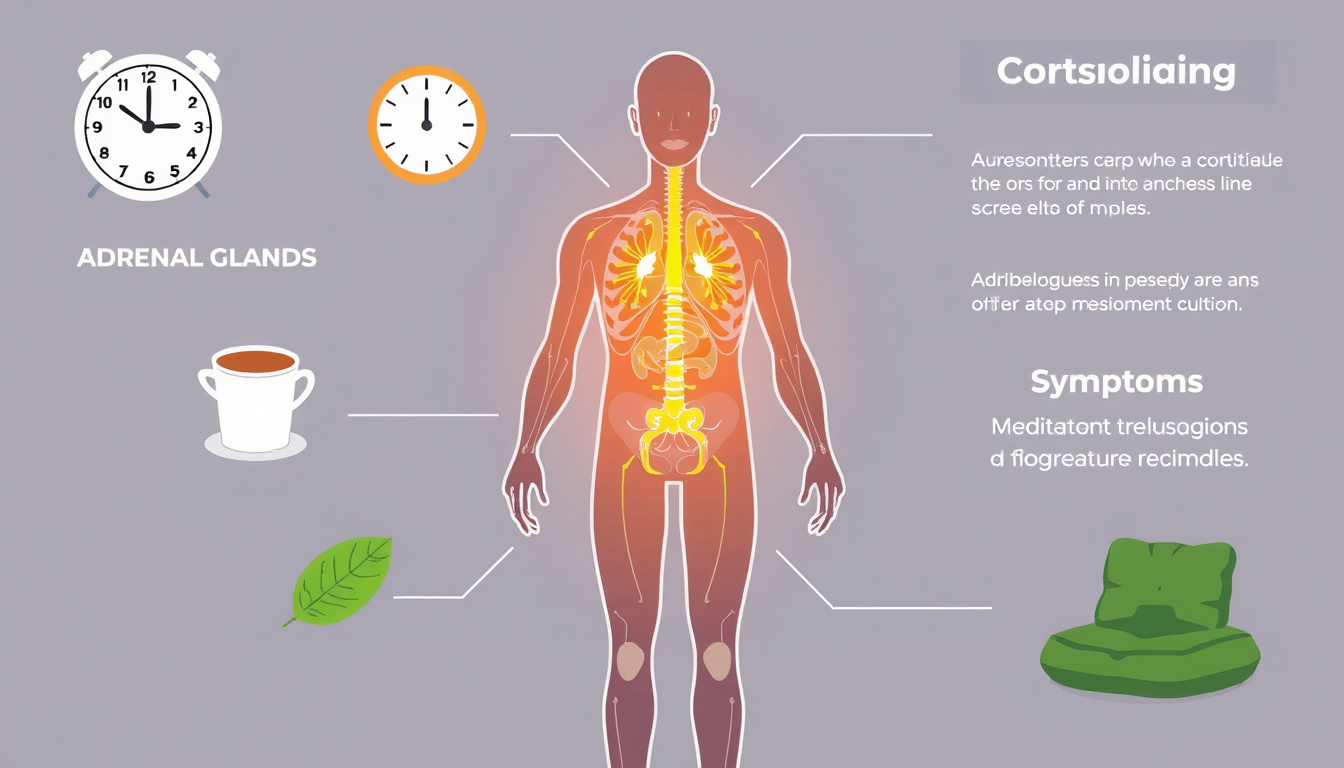
- Steroid hormone from adrenal glands (Cleveland Clinic (endocrinology reference))
- Regulates stress, metabolism, inflammation (Cleveland Clinic) (Cleveland Clinic (endocrinology reference))
- Follows a daily circadian rhythm (Cleveland Clinic) (Cleveland Clinic (endocrinology reference))
- Weight gain, especially face and abdomen (Cleveland Clinic) (Mayo Clinic)
- Fatigue, irritability, easy bruising (Mayo Clinic)
- High blood pressure, bone loss (Mayo Clinic) (Mayo Clinic)
- Stress management (meditation, exercise) (Cleveland Clinic)
- Improve sleep, reduce caffeine (Cleveland Clinic)
- Certain drinks and supplements may help
- Blood, urine, or saliva tests (NIDDK (U.S. federal health institute))
- Morning sample for blood test (NIDDK) (NIDDK (U.S. federal health institute))
- Must be interpreted by a doctor (NIDDK) (NIDDK (U.S. federal health institute))
Four facts, one pattern: cortisol is neither all good nor all bad – the difference comes down to dose and duration.
| Attribute | Details |
|---|---|
| Hormone class | Glucocorticoid steroid |
| Produced by | Adrenal glands (cortex) |
| Regulates | Stress response, metabolism, immune function, blood pressure |
| Measured by | Blood, urine, or saliva test |
What is cortisol?
Where is cortisol produced?
- Cortisol is a steroid hormone produced by the adrenal glands (Cleveland Clinic (endocrinology reference)).
- The adrenal cortex releases cortisol in response to ACTH from the pituitary gland.
- This system is part of the HPA axis – the body’s central stress circuit.
What does cortisol do in the body?
- It helps regulate the body’s response to stress and affects several aspects of health (Cleveland Clinic).
- Cortisol follows a circadian rhythm with highest levels in the morning.
- It also controls metabolism, reduces inflammation, and helps manage blood pressure.
The implication: cortisol is a master regulator – without it, the body cannot adapt to daily demands. But that same power makes it dangerous when it overstays its welcome.
What happens if cortisol is high?
Short-term vs chronic high cortisol
- Short‑term high cortisol is normal and helpful – it sharpens focus and mobilises energy.
- Very high cortisol levels over a long period are usually associated with Cushing syndrome (Cleveland Clinic).
- Chronic elevation can contribute to weight gain, high blood pressure, and immune suppression.
Health risks of prolonged elevation
- Chronic high cortisol can lead to weight gain, high blood pressure, weakened immune system.
- Extreme elevation may indicate Cushing’s syndrome – a disorder where the body makes too much cortisol over a long period (NIDDK (U.S. federal health institute)).
- The most common cause is long‑term, high‑dose use of glucocorticoid medicines (NIDDK).
The pattern: the same hormone that rescues you in an emergency can, over months and years, silently damage your organs. The dose and duration are everything.
What are the warning signs of high cortisol?
Physical symptoms
- Common signs: rapid weight gain (especially face and belly), fatigue, irritability (Cleveland Clinic).
- Symptoms of Cushing syndrome commonly include a fatty hump between the shoulders and a rounded face (Mayo Clinic (research hospital)).
- Wide, purple stretch marks are a classic sign, along with thin arms and easy bruising (NIDDK).
Mental and emotional symptoms
- People with Cushing syndrome may develop high blood pressure and bone loss (Mayo Clinic).
- Women may have thick, dark facial or body hair and irregular or stopped periods (Mayo Clinic).
- Men may have lower sex drive and erectile dysfunction (NIDDK).
What this means: if you’re gaining weight around your midsection, feeling wired but tired, and noticing purple stretch marks, it’s time to talk to a doctor – these are not just “stress symptoms.”
How can I reduce cortisol?
Lifestyle changes
- Stress management techniques (meditation, exercise) lower cortisol (Cleveland Clinic).
- Sleep improvement and reducing caffeine help.
- Regular physical activity, especially moderate aerobic exercise, can blunt the stress response.
Diet and supplements
- Certain drinks like green tea and tart cherry juice may reduce cortisol.
- Vitamin D, magnesium, and omega‑3s are linked to lower cortisol levels.
- However, the exact mechanism linking individual supplements to cortisol reduction still needs more research.
Medical treatments
- Severe cases (Cushing’s syndrome) may require medication or surgery.
- If medicines are the cause, a doctor may adjust the dose or switch to an alternative.
The trade‑off: lifestyle changes are powerful for everyday high cortisol, but they can’t fix a medical condition like Cushing’s syndrome. If your symptoms are severe, get evaluated before trying supplements.
Cortisol is what gets you out of bed in the morning – but when it stays high all day, it can keep you from sleeping at night. Evening routines matter because your circadian rhythm depends on a nightly drop in cortisol.
How do I check my cortisol levels?
Types of cortisol tests
- Cortisol can be measured in blood, urine, or saliva (NIDDK).
- Blood test is most common; morning sample is typical (Cleveland Clinic).
- Saliva tests measure free cortisol; 24-hour urine tests total output.
How to prepare
- For a blood test, the morning (between 7 a.m. and 9 a.m.) is standard because cortisol is at its diurnal peak.
- You may need to avoid eating or certain medications beforehand — follow your doctor’s instructions.
Interpreting results
- Results must be interpreted by a doctor; normal ranges vary by lab.
- Higher-than-normal cortisol levels in a 24-hour urine test suggest Cushing’s syndrome (NIDDK).
The catch: testing is only useful if you act on the results — a number without context is just data.
How to reduce cortisol: a step‑by‑step plan
- Start with sleep – aim for 7–9 hours; poor sleep elevates cortisol the next day.
- Move your body – 30 minutes of moderate exercise (brisk walking, cycling) most days (Cleveland Clinic).
- Cut back on caffeine – limit to 2 cups before noon; afternoon coffee can raise evening cortisol.
- Practice stress inoculation – 10 minutes of deep‑breathing or meditation daily (Cleveland Clinic).
- Add magnesium‑rich foods – leafy greens, nuts, seeds. Magnesium supplementation shows promise for lowering cortisol, but individual responses vary.
- Consider green tea – L‑theanine in green tea may blunt the cortisol spike after stress.
- Get your vitamin D checked – deficiency is linked to higher cortisol.
- Limit alcohol – alcohol raises cortisol, especially when consumed in the evening.
For the average person with stress‑related high cortisol, steps 1–4 are the highest‑impact interventions. For severe cases, step zero is a doctor’s appointment.
Cortisol: confirmed facts vs what remains unclear
Confirmed facts
- Cortisol is essential for survival and stress response (Cleveland Clinic).
- Chronic high cortisol is linked to metabolic syndrome and Cushing’s syndrome (Mayo Clinic).
- Cortisol follows a daily circadian rhythm (Cleveland Clinic).
What’s unclear
- Exact mechanism linking cortisol to abdominal fat distribution.
- Effectiveness of individual natural supplements in lowering cortisol (more research needed).
- Precise cortisol levels that trigger health problems vary by individual.
The pattern: knowing what is settled and what remains uncertain helps you make informed decisions about your health.
“Cortisol is the body’s natural alarm system, but when the alarm never shuts off, it starts to wear down every system it was meant to protect.”
— Cleveland Clinic endocrinologist (cited in patient education materials)
“Purple stretch marks, a rounded face, and a fatty hump between the shoulders — these are classic physical signs that suggest you’re dealing with more than everyday stress.”
— Mayo Clinic medical review (Cushing syndrome symptom guide)
The dual nature of cortisol means that what saves you in an acute crisis can slowly harm you when left unchecked. For anyone experiencing persistent fatigue, central weight gain, or mood swings, the sensible next step is not another supplement — it’s a simple blood or saliva test. For most people, lifestyle changes like better sleep, consistent exercise, and mindful stress management are enough to bring cortisol back into a healthy range. For those with clinical elevation, ignoring the warning signs risks irreversible damage. The choice is yours: listen to your body’s alarm, or let it ring until something breaks.
bannerhealth.com, ubiehealth.com, saintjohnscancer.org, swhpalmdaleregional.com, adrenal.com
Frequently asked questions
What is a cortisol spike?
A cortisol spike is a sudden, sharp rise in circulating cortisol, often triggered by acute stress, exercise, or a perceived threat. It’s normal and temporary, but frequent spikes can contribute to chronic elevation.
Can stress cause high cortisol?
Yes. The HPA axis responds to psychological stress by releasing cortisol. Chronic or repeated stress leads to sustained high cortisol levels, which can affect weight, sleep, and immune function.
Does caffeine increase cortisol?
Caffeine stimulates the adrenal glands and can raise cortisol, especially in people who are not habitual coffee drinkers. The effect is dose‑dependent and tends to decrease with regular consumption.
What is the best time to test cortisol?
For a blood test, the morning (between 7 a.m. and 9 a.m.) is standard because cortisol is at its diurnal peak. Saliva tests often use late‑night samples to assess the nadir. Your doctor will advise based on the question.
Can diet lower cortisol?
Certain dietary patterns – like a Mediterranean diet rich in vegetables, healthy fats, and lean protein – are associated with lower cortisol. Specific foods (green tea, tart cherry juice, dark chocolate) show promise in small studies, but no single food is a cure.
What is the cortisol awakening response?
It’s the natural 50‑60% rise in cortisol that occurs within 30–45 minutes after waking. It helps you transition from sleep to alertness. A blunted or exaggerated response can indicate HPA axis dysfunction.
Is high cortisol reversible?
In most cases, yes. Lifestyle modifications can lower cortisol by 20–30% in people with stress‑related elevation. Cushing’s syndrome caused by a tumour or medication requires medical treatment but is often reversible with proper management.
Women: irregular periods and facial hair are early, often‑overlooked signs of high cortisol. If you notice both together, ask for a morning cortisol blood test – not just a “stress check” from a wellness app.
Related reading
- Low Calorie Snacks: Best Options for Weight Loss and Fullness – weight management is a common concern when cortisol drives appetite.
- The Let Them Theory: Mel Robbins’ Guide Explained – a practical mindset approach to reducing stress, which can help lower cortisol naturally.

Ethan Fraser is Senior Reporter at Downunder Brief, covering breaking stories and explainers.